01
Doctoral Thesis Defense
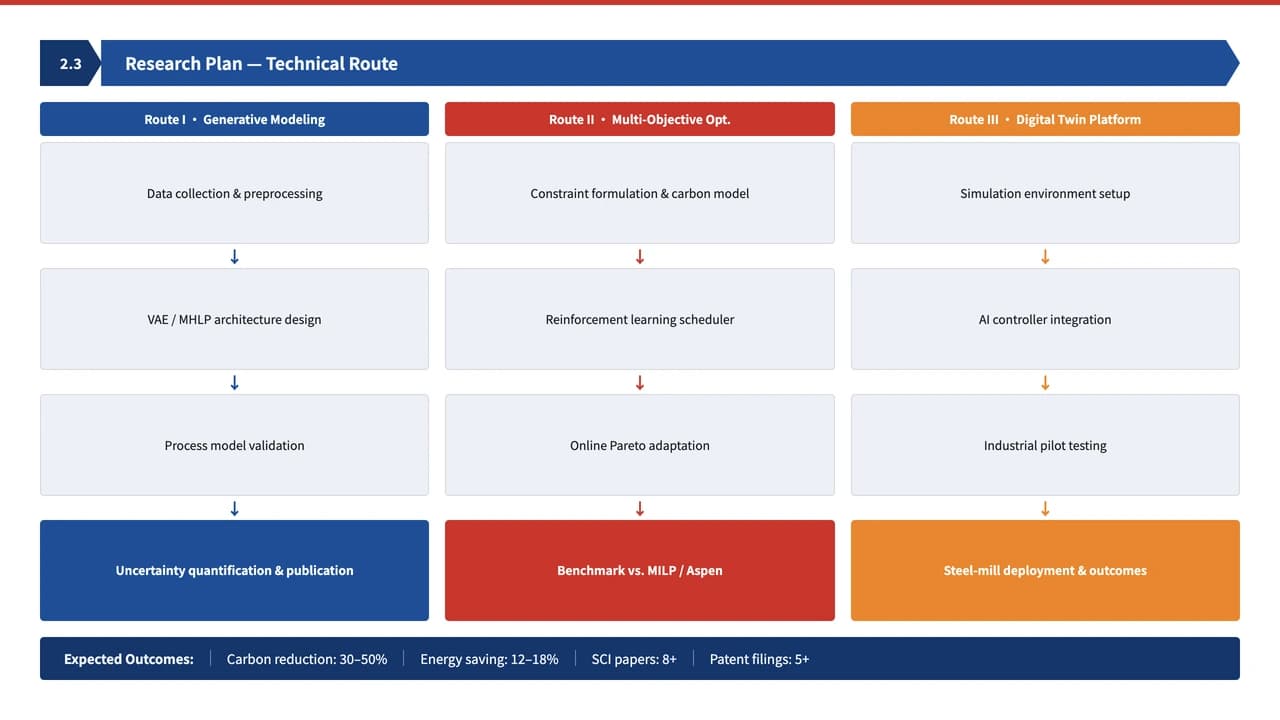
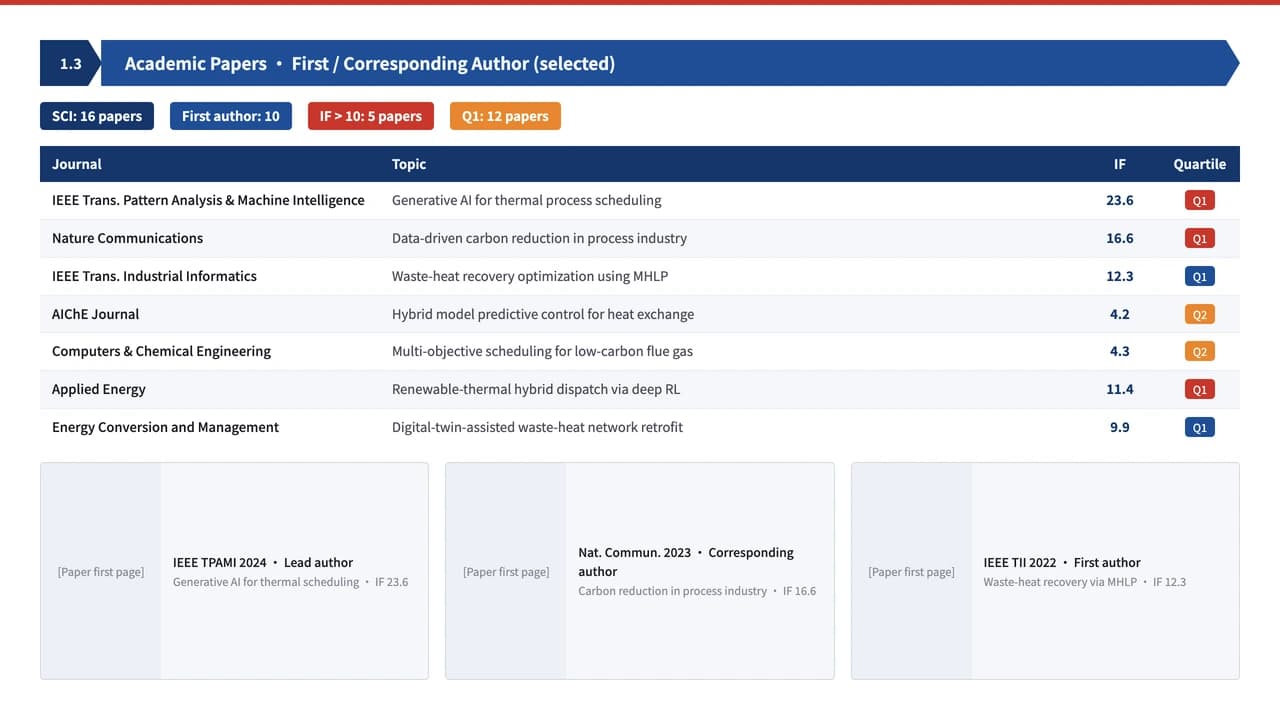
A doctoral candidate presents a multi-year study to a review committee. The structured technical route slides allow for a clear breakdown of experimental stages and publication outcomes.

Institutional navy design with dense logic-driven process diagrams and grid systems.
Scholar Navy is built for high-density academic environments where technical detail is paramount.
The cover features a deep #15356B navy background with a subtle geometric grid, establishing a grounded, institutional tone.
Typography utilizes a clean sans-serif stack of Inter and Noto Sans SC, ensuring that complex formulas and multi-line labels remain legible.
Interior slides transition to a light grey #EDF0F5 background to maintain clarity during long sessions.
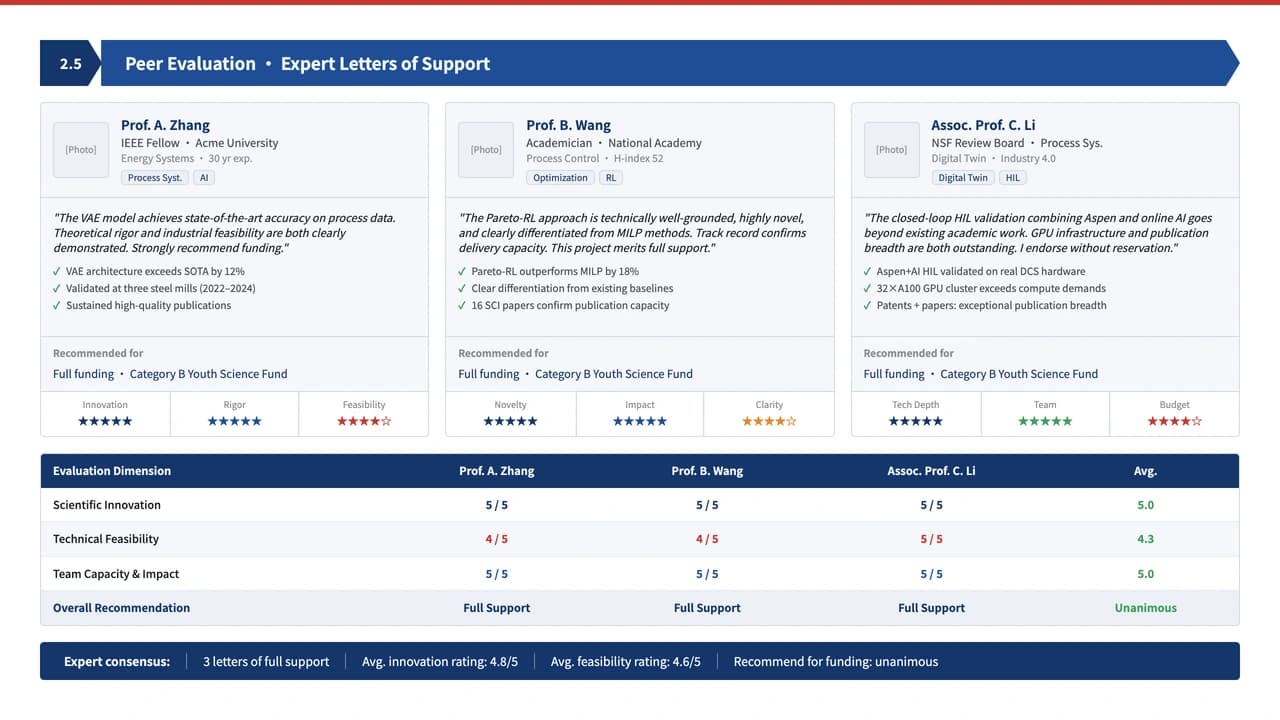
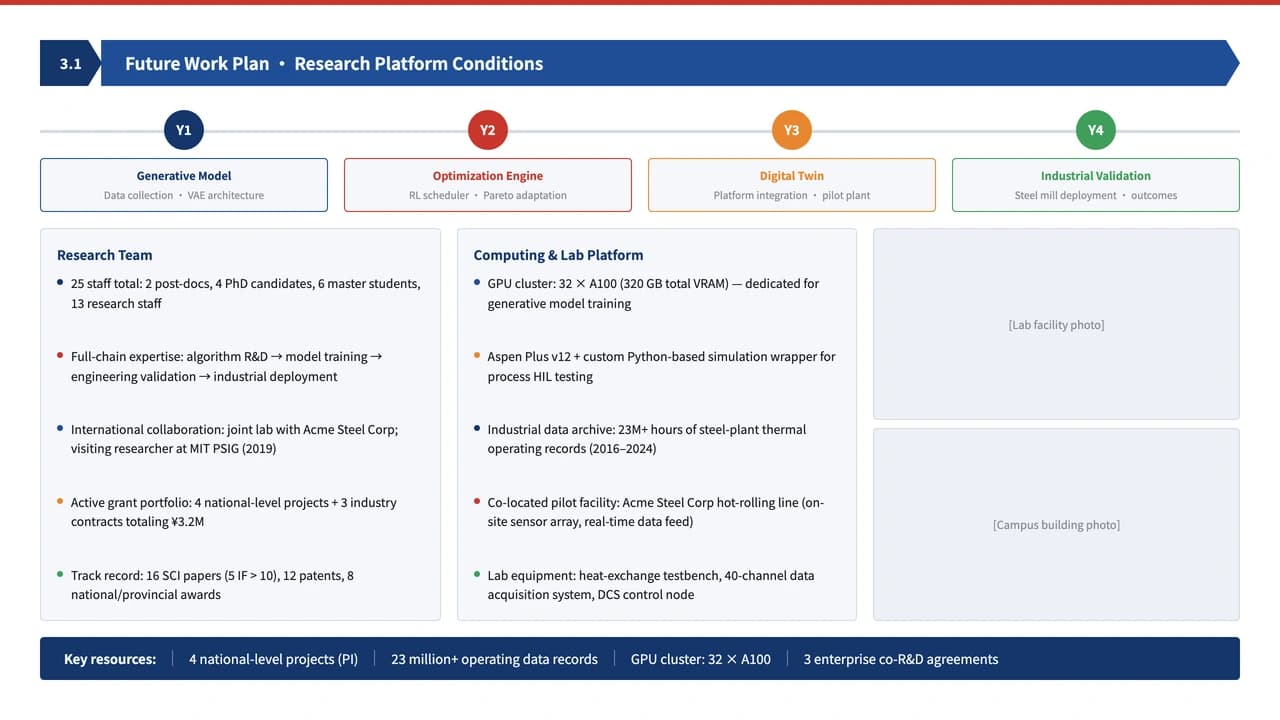
You will find structured 'evidence panels' and three-column technical route matrices that replace standard bullet points.
The design uses chevron-shaped section headers to mark transitions clearly.
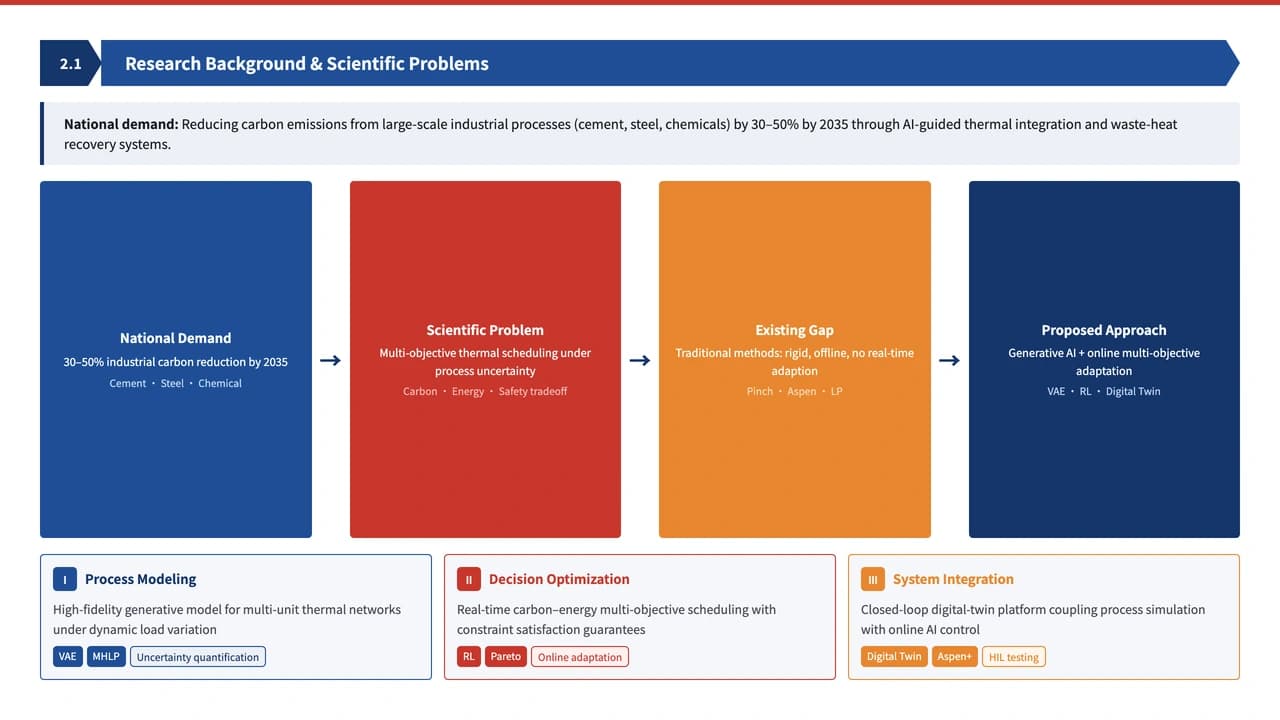
Distinctive red and orange accents are applied to specific flowchart nodes, allowing presenters to categorize scientific problems and existing gaps without adding visual clutter.
The visual system relies on a functional tri-color palette of navy, red, and orange for information hierarchy.
Layouts are governed by a strict modular grid, often dividing the canvas into vertical zones for comparative technical analysis.
A key design detail is the use of rounded-corner pills for technical tags like 'VAE' or 'Reinforcement Learning,' which helps organize dense terminology.
The typography uses bold weights for section titles and medium weights for body text to maintain a clear path for the eye.
Connection lines and arrows are integrated into the slide masters, facilitating the creation of multi-step methodology diagrams that stay aligned with the overall grid.
Every theme has a stage it belongs on. These are the moments this one was built for.
A doctoral candidate presents a multi-year study to a review committee. The structured technical route slides allow for a clear breakdown of experimental stages and publication outcomes.
A principal investigator justifies a new project to a funding body. The 'Scientific Problem' and 'Proposed Approach' slides use contrasting color blocks to highlight the research necessity.
An engineering team presents a digital twin integration plan. The multi-node flowchart components help map out system architecture and expected carbon reduction metrics for stakeholders.
01 / 8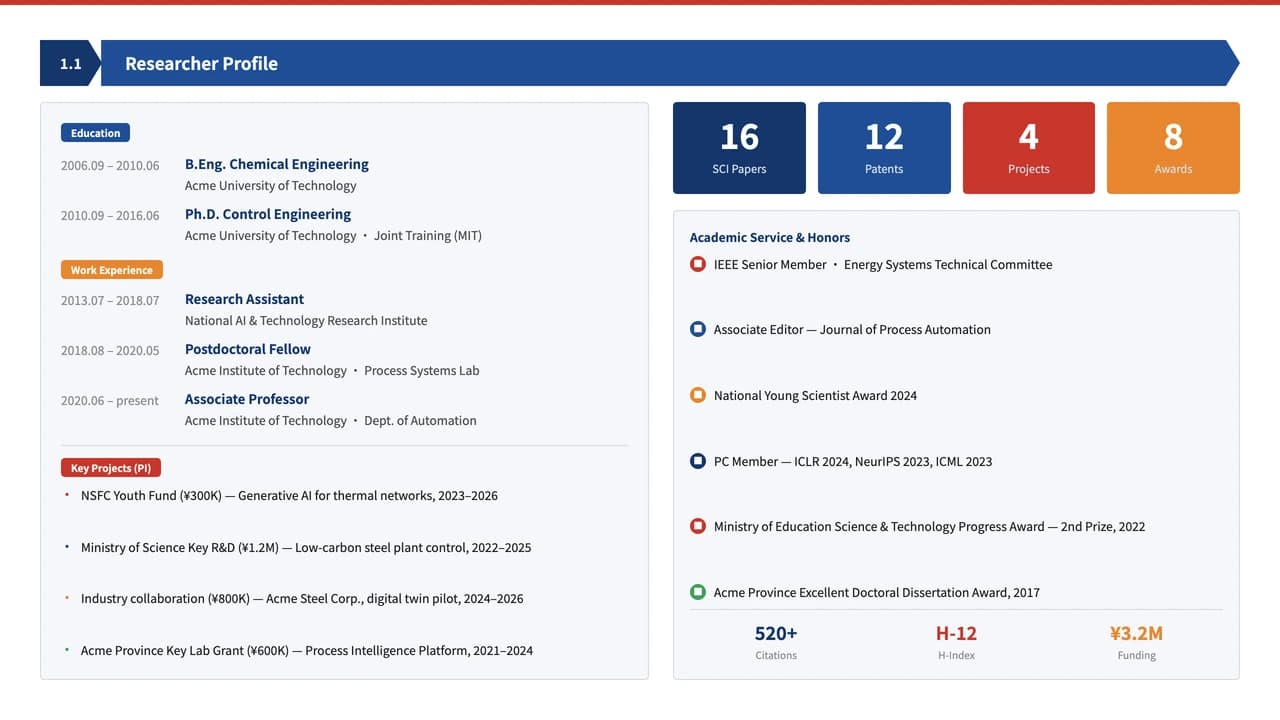 02 / 8
 03 / 8
 04 / 8
 05 / 8
 06 / 8
 07 / 8
 08 / 8
Pick this template, upload your content, and our AI will compose it into the 8-slide arc of Scholar Navy Academic Thesis and Technical Route Template — your job is just to polish the key data.