The McKinsey Way: How to Present Research Findings That Drive Executive Decisions
Learn the McKinsey methodology for presenting research findings that drive executive decisions, from the Pyramid Principle to consulting-grade slide design.
The McKinsey Way: How to Present Research Findings That Drive Executive Decisions
Jordan Turner | March 9, 2026 | 8 min read
In the world of top-tier consulting firms like McKinsey or Goldman Sachs, research is never just about gathering information. A piece of data, no matter how groundbreaking, is essentially worthless if it fails to drive a strategic decision.
Many researchers and analysts fall into a common trap: they focus on the exhaustive process of their discovery rather than the impact of their findings. They treat a presentation as a chronicle of their labor, when it should be a vehicle for strategic insight. If you are presenting to C-suite executives or high-stakes investors, you are not there to explain how much work you did; you are there to explain what the work means for the future of the organization.
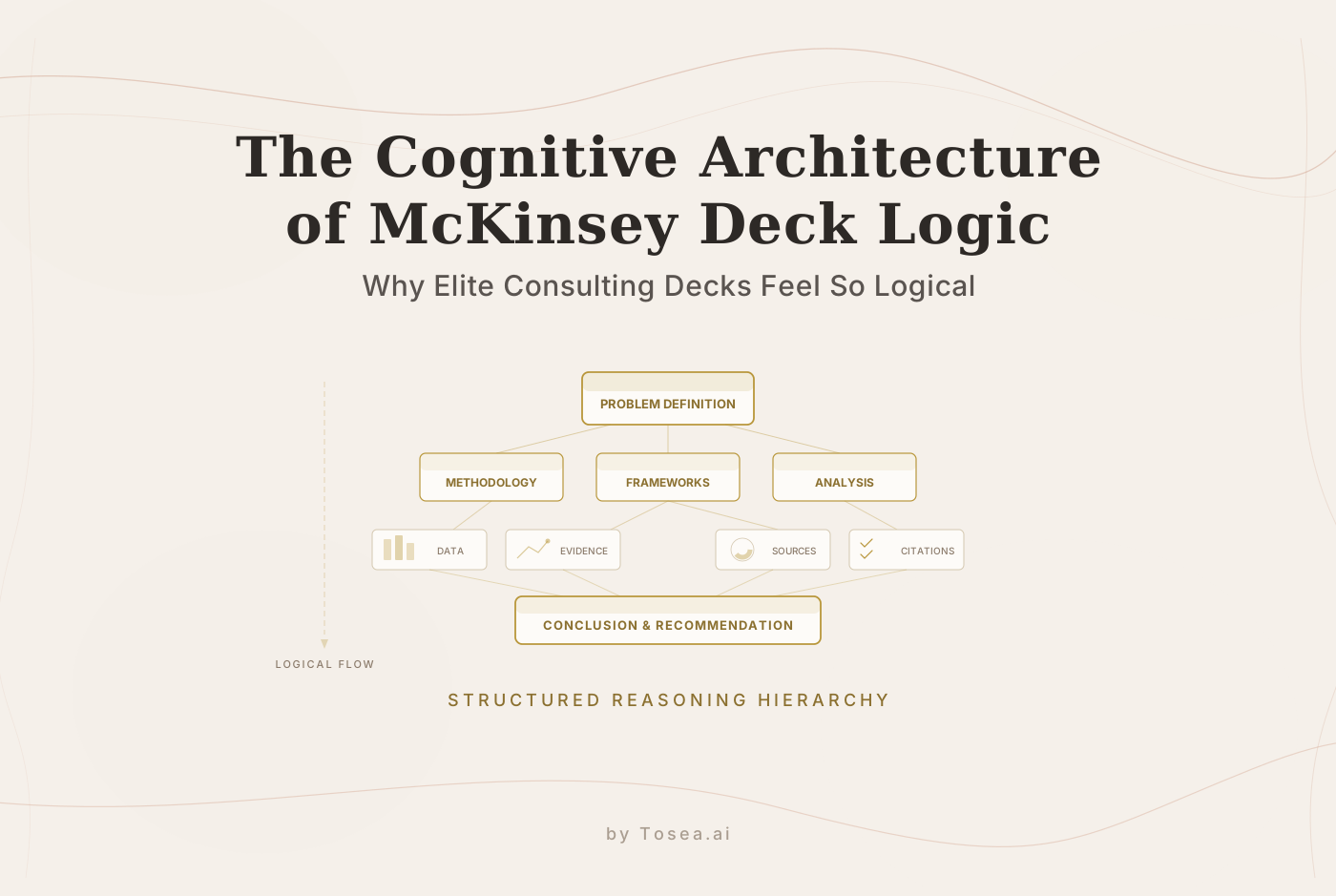
Here is how you can adopt the McKinsey mindset to transform your research into a powerful, executive-ready presentation. For a deeper dive into the cognitive architecture behind McKinsey decks, see our article on why McKinsey decks feel so logical.
1. Adopt the Pyramid Principle
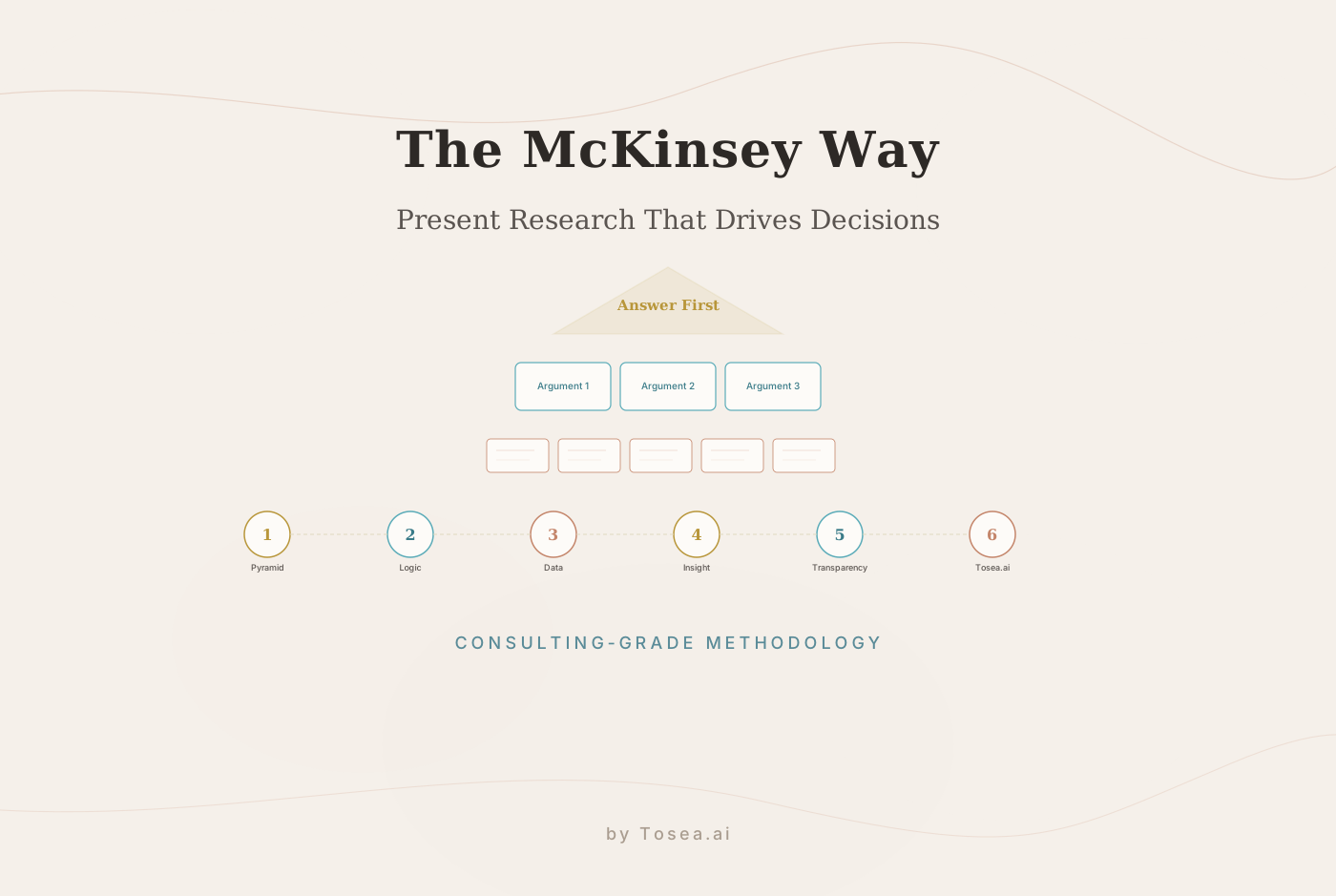
The most successful presentations do not follow the narrative arc of a mystery novel, where the answer is revealed at the end. They follow the Pyramid Principle, pioneered by Barbara Minto at McKinsey. You must start with the Answer (the main recommendation or insight), followed by the supporting arguments, and finally the data that validates those arguments.
Executives are time-pressed. They need to understand the conclusion within the first sixty seconds of your presentation. By front-loading the conclusion, you provide the context necessary for the audience to process the supporting data in the right light. For practical tips on crafting these executive summaries, see our guide on how to craft a high-stakes executive summary.
2. Structure for Logic, Not Just Chronology
A common mistake in research presentations is organizing slides based on the chronology of the project. Avoid moving from literature review to methodology to data collection to findings. Instead, move from the Problem to the Insight to the Implication.
Every slide should be an argument, not a label. If your slide title is "Market Trends in 2026," you have missed an opportunity. Change that title to "Market Trends Indicate a 15% Decline in Customer Retention," and suddenly, your slide is communicating a takeaway that requires an immediate strategic reaction. Our Top 10 Business Presentation Tips covers more techniques for sharpening your narrative.
3. Utilize Data as Evidence, Not the Main Attraction
Data is the foundation of your authority, but visuals are the foundation of your persuasion. Too many analysts populate slides with raw tables and cluttered charts, assuming that more data equates to more credibility.
In reality, the best research presentations use data to highlight a singular trend or comparison. If your chart doesn't support the specific point you are making on the slide, it is clutter. Strip away the extra gridlines, remove unnecessary legends, and ensure that the most important data point is the most visually dominant element. For more on transforming data into compelling visuals, check out our article on market performance monitoring to executive presentations.
4. Master the Art of the Actionable Insight
A finding is an observation; an insight is an implication. If you state that customer churn has increased by 5%, you have provided a finding. If you state that customer churn has increased because of a shift in competitor pricing, and therefore we should adjust our loyalty program, you have provided an insight.
Always ask yourself: So what? If your findings don't lead to a clear recommendation, a change in strategy, or a next step, your audience will walk away feeling informed but ultimately indifferent. Our guide on 4 masterstrokes of executive reporting covers this in greater detail.
5. Build Credibility Through Transparency
One of the most effective ways to manage executive skepticism is to be the first to point out the constraints of your research. Acknowledging limitations—such as sample size constraints, assumptions made in the model, or potential biases—does not undermine your authority. It enhances it. It shows that you are a serious professional who understands the context of your data, and it prevents the audience from hunting for holes in your argument.
6. Leverage Tosea.ai to Architect Your Narrative
Even with the best methodology, converting a 50-page research paper into a professional 15-slide deck is a massive undertaking. This is where most analysts lose their momentum. For a step-by-step guide to this process, see our article on turning a 30-page research paper into professional slides in 10 minutes.
Tosea.ai was built specifically to bridge this gap between complex research and executive-level presentations. Unlike general AI tools that merely summarize text, Tosea.ai acts as a logical architect for your findings.
- Spatial Semantic Perception: Tosea.ai understands the structural hierarchy of your research. It parses your Word documents or PDFs to identify the core findings, ensuring that the critical conclusions of your research are not flattened or lost in translation.
- Absolute Traceability: When an executive challenges a specific metric, you cannot afford to guess. Tosea.ai maintains the link between your slides and the source document. You can instantly trace any insight back to the original paragraph, ensuring you are always ready for the Q&A session.
- Consulting-Grade Templates: Forget the distraction of choosing fonts or adjusting colors. Tosea.ai utilizes templates inspired by the professional standards of top-tier consulting firms like McKinsey, BCG, and Bain. Your deck will look rigorous, structured, and authoritative from the moment it is generated.
- Native PPTX Compatibility: Once the heavy lifting is done, you can export your findings as a fully editable PowerPoint file. This allows you to add those final personal touches that reflect your unique voice and institutional knowledge.
Final Thoughts: The Goal is Impact
Presenting research is not about being right—it is about being useful. By structuring your narrative with a conclusion-first approach, focusing on insights rather than raw data, and utilizing intelligent tools to handle the mechanical labor of slide creation, you can ensure that your research translates into real, strategic action.
Don't let your months of deep analysis be buried under a slide deck that lacks logical rigor. It is time to treat your research findings with the professional weight they deserve. For more tips on how AI can elevate your presentation quality, explore our guide on 10 tips for turning complex files into executive-grade AI presentations.
Ready to turn your research into boardroom-ready presentations in seconds? Register for Tosea.ai today and unlock the power of professional, research-driven slide transformation.