How to Use DeerFlow by ByteDance: Complete Guide to the Open-Source Super Agent
A complete guide to DeerFlow 2.0, ByteDance's open-source super agent with skills, sub-agents, sandboxed execution, and real-world research, content, and document-to-presentation workflows.
Here is a scenario that every knowledge worker knows well. You spend three days buried in research — reading papers, pulling data, synthesizing competitive intelligence — and then you spend another two days translating all of that work into a presentation that someone will glance at for seven minutes before asking for a summary. The research was the hard part. The delivery was the bottleneck.
This gap between intelligence and professional output is exactly what the modern AI agent stack is being built to close. And if you want to see where that stack is heading, look no further than DeerFlow — the open-source super agent harness from ByteDance that claimed the number one spot on GitHub Trending in February 2026 with over 47,000 stars.
If you have been following how AI agents are redefining professional slides, DeerFlow represents the research and synthesis side of that equation. It handles the upstream intelligence work, and a dedicated presentation layer handles the downstream delivery. More on that pairing later.
What Is DeerFlow?
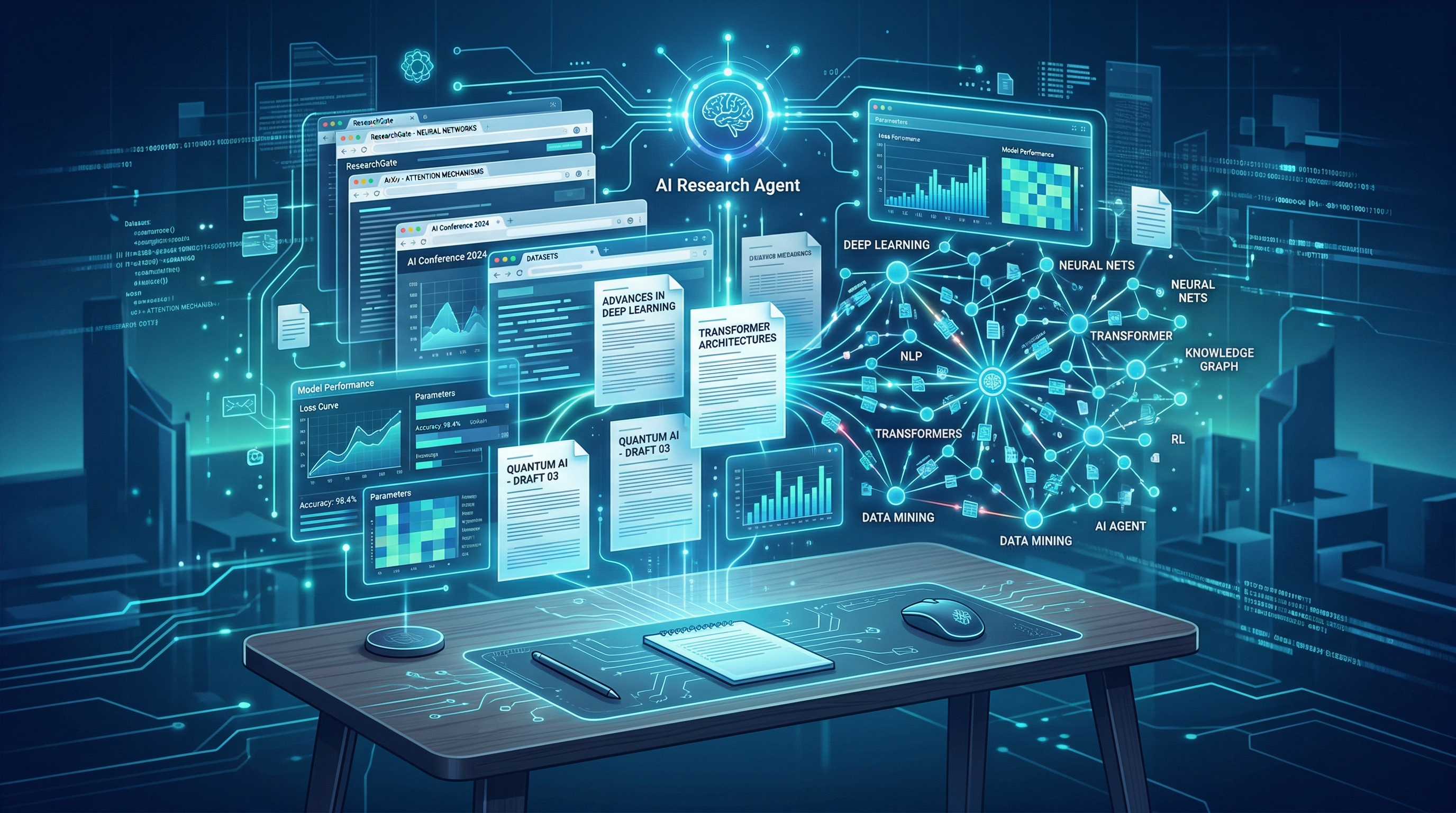
DeerFlow stands for Deep Exploration and Efficient Research Flow. It started life as a deep research framework — an automated pipeline for gathering, synthesizing, and reporting information. But the community took it further than its creators anticipated, using it to build data pipelines, generate slide decks, spin up dashboards, and automate content workflows.
The ByteDance team responded by rebuilding it from scratch. DeerFlow 2.0, released in early 2026, is no longer just a research tool. It is a super agent harness — a runtime environment that gives AI agents the full infrastructure they need to actually complete work, not just talk about it.
Built on LangChain and LangGraph, DeerFlow ships with everything an agent needs out of the box: a sandboxed filesystem, persistent memory, a skills system, sub-agent orchestration, and native integrations with messaging platforms like Telegram, Slack, and Feishu.
The critical distinction from other agent frameworks is this: DeerFlow does not just tell you what it would do. It actually does it, inside an isolated execution environment, with auditable results.
Who Is DeerFlow For?
Before diving into the technical architecture, it is worth understanding the audience DeerFlow serves — because the system's flexibility means it appeals to several distinct groups, each using it differently.
Researchers and Academics. Graduate students, postdoctoral fellows, and research teams use DeerFlow to accelerate literature reviews and competitive landscape analyses. A research brief that might take a human analyst two full days can be completed in under an hour. The sub-agent system fans out across dozens of sources simultaneously, synthesizes findings, and produces structured reports with proper citations. If you use the 10-minute AI workflow for research papers, DeerFlow slots in naturally as the upstream research engine.
Consultants and Analysts. Strategy consultants, market analysts, and financial professionals benefit from DeerFlow's ability to produce structured intelligence outputs — competitive analyses, market sizing documents, due diligence summaries — that can feed directly into client deliverables. The persistent memory system means the agent learns your firm's preferred formatting and terminology over time.
Developers and Engineers. The sandboxed execution environment makes DeerFlow a capable coding assistant. It writes code, runs it, observes output, and iterates — all autonomously. Developers managing complex data pipelines, building internal tools, or prototyping automations find the Coding Agent skill particularly useful. The Claude Code integration (covered below) makes this even more seamless.
Content Teams and Marketing. Bloggers, SEO practitioners, and content strategists use DeerFlow to automate research-to-publication pipelines. Feed it a topic brief, and it can research, draft, format, and push content — all from a single natural language instruction. Teams that produce high volumes of research-backed content see the largest productivity gains.
Core Features That Set DeerFlow Apart
The Skills System
Skills are the heart of DeerFlow. A skill is a structured capability module — essentially a Markdown file that teaches the agent how to approach a specific type of task. DeerFlow ships with built-in skills covering deep research, report generation, slide creation, web page development, and image and video generation. The skills architecture shares conceptual DNA with the kind of modular AI tooling explored in our guide to the best OpenClaw skills.
The architecture is intentionally minimal. Skills are loaded progressively — only when the current task requires them — which keeps the context window lean and makes DeerFlow highly compatible with token-sensitive models. This means the agent stays sharp even on long, multi-step tasks that unfold over hours.
You can add your own custom skills, replace built-in ones, or combine multiple skills into compound workflows. The skill registry lives at /mnt/skills/public inside the sandbox container, making it straightforward to inspect, audit, and extend.
Sub-Agent Orchestration
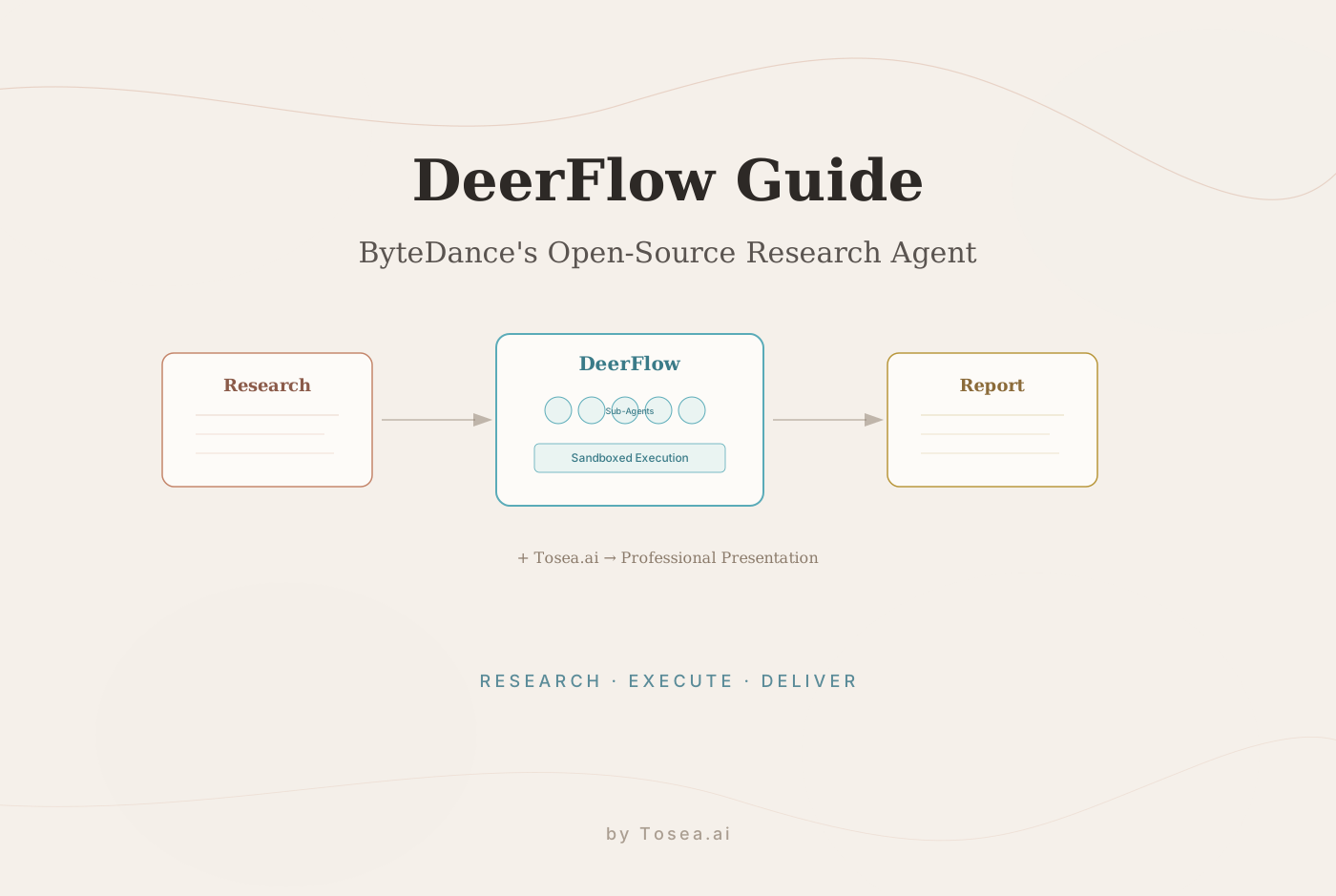
Complex tasks rarely fit inside a single pass of reasoning. DeerFlow handles this through a sub-agent architecture. The lead agent can spawn specialized sub-agents on the fly, each scoped to a specific portion of the task. Sub-agents run in parallel when possible, report structured results back to the lead agent, and the lead synthesizes everything into a coherent final output.
In practice, this means a single research request might fan out into a dozen sub-agents simultaneously exploring different angles — market trends, competitor analysis, technical specifications, regulatory context — and then converge into a unified report, or a website, or a fully illustrated slide deck. This approach to multi-agent slide generation is becoming the standard pattern for complex knowledge work.
Sandboxed Execution Environment
This is where DeerFlow separates itself from tools that merely claim to have tool access. Every task runs inside an isolated Docker container with a complete filesystem. The agent reads files, writes files, executes bash commands, runs Python scripts, and views images — all sandboxed, all auditable, with zero contamination between sessions.
The workspace is structured cleanly:
/mnt/user-data/uploads/— files you provide to the agent/mnt/user-data/workspace/— the agent working directory/mnt/user-data/outputs/— final deliverables
This is the difference between a chatbot that describes what it would build and an agent that actually builds it.
Long-Term Memory
Most AI tools are amnesiac by design — the moment a session ends, all context is lost. DeerFlow maintains persistent memory across sessions. It builds a cumulative profile of your preferences, your technical stack, your writing style, and your recurring workflows. The more you use it, the better it understands how you work. Memory is stored locally and remains under your control.
Multi-Platform Messaging Integration
DeerFlow connects natively to Telegram, Slack, and Feishu through a channel configuration system. Once configured, you can send tasks, check status, manage threads, and receive results directly inside your existing communication tools — no public IP required for any of the channels.
How to Get Started with DeerFlow
Getting DeerFlow running is a straightforward process. Here is the practical path from zero to operational.
Step 1: Clone the Repository and Generate Configuration
git clone https://github.com/bytedance/deer-flow.git
cd deer-flow
make config
The make config command generates local configuration files from the provided templates. This is where you define your model preferences.
Step 2: Configure Your Model
DeerFlow is model-agnostic. It works with any LLM that implements the OpenAI-compatible API. The ByteDance team recommends Doubao-Seed-2.0-Code, DeepSeek v3.2, and Kimi 2.5 for the best performance. You can also configure GPT-5, Claude Sonnet 4.6, Gemini 2.5 Flash via OpenRouter, or any local model through Ollama.
Add your API keys to the .env file in the project root:
TAVILY_API_KEY=your-tavily-api-key
OPENAI_API_KEY=your-openai-api-key
Step 3: Launch the Application
Docker is the recommended approach for most users:
make docker-init    # Pull the sandbox image (one time only)
make docker-start   # Start all services
Access the interface at http://localhost:2026. For local development without Docker, make dev handles the full startup sequence after make install.
Real-World Use Cases

Deep Research and Report Generation
This is where DeerFlow began and where it still excels. Feed it a research brief — a market analysis, a competitive landscape, a technical deep-dive — and the sub-agent system fans out across sources, synthesizes findings, and produces a structured report with citations. A typical market landscape report that might take a human analyst 15 to 20 hours of focused work can be drafted in 30 to 60 minutes, with the agent pulling from academic databases, industry publications, news archives, and public datasets simultaneously.
Code Generation and Debugging
The sandboxed execution environment means DeerFlow can write code, run it, observe the output, and iterate — all autonomously. For developers managing complex pipelines or building custom automations, the Coding Agent skill provides a dedicated sub-agent focused entirely on technical execution. Common patterns include generating data transformation scripts, building API integrations, and scaffolding internal dashboards from raw datasets.
Content Workflow Automation
Content teams use DeerFlow to automate the full content pipeline: research a topic, draft the article, format it for publication, and push it to WordPress or a static site generator — all from a single natural language instruction. The agent handles source verification, citation formatting, and SEO metadata generation as part of the standard workflow.
Integration with Claude Code
The claude-to-deerflow skill allows Claude Code users to interact with a running DeerFlow instance directly from the terminal. You can send research tasks, check status, manage threads, and upload files for analysis without leaving your development environment:
npx skills add https://github.com/bytedance/deer-flow --skill claude-to-deerflow
How DeerFlow Compares
DeerFlow occupies a specific position in the agent landscape. It is worth understanding how it relates to the alternatives.
Versus ChatGPT or Claude with tool use. General-purpose assistants can call tools and write code, but they run in ephemeral sessions without persistent filesystems or long-term memory. DeerFlow provides a full execution environment that persists across sessions, with a structured skills system that keeps the agent focused on domain-specific workflows.
Versus AutoGPT and similar autonomous agents. Earlier autonomous agent projects demonstrated the concept but often struggled with reliability and cost control. DeerFlow's sub-agent orchestration is more disciplined — the lead agent maintains a coherent plan, delegates specific subtasks, and synthesizes results rather than letting agents run unsupervised. The skills system also provides guardrails that keep execution on track.
Versus proprietary research tools like Perplexity or Elicit. These platforms excel at search and synthesis within their own interfaces, but they are closed systems. DeerFlow is open source under the MIT license, runs locally, and produces outputs you can pipe into any downstream workflow. For teams that need to integrate research automation into existing infrastructure, that distinction matters.
For a broader comparison of AI-powered presentation and research tools, the best AI presentation makers for 2026 roundup covers the delivery side of the equation.
The Last Mile: From Agent Output to Professional Presentation
Here is the honest limitation of any agent framework, DeerFlow included. An agent is extraordinary at gathering, synthesizing, and structuring information. What it produces — typically a Markdown file, a PDF, or a structured report — is intellectually complete but not professionally deliverable.
You cannot walk into a board meeting with a Markdown file. You cannot send a .txt summary to an investor and expect it to command authority. The final mile of professional work requires a different layer entirely.
This is where Tosea.ai closes the loop. Once your DeerFlow agent has completed its research and handed you a document, Tosea.ai takes that file and transforms it into a consulting-grade PowerPoint presentation. It does not simply reformat text into bullets — it applies Spatial Semantic Perception to understand the logical hierarchy of your content, identifies the strategic pillars versus supporting data, and builds a narrative flow that holds together as a professional argument.
Every claim in the generated presentation is traceable back to the source document through Absolute Traceability — critical for any professional environment where a stakeholder might challenge a specific figure mid-meeting. The output is a native .pptx file, fully editable in PowerPoint or Google Slides, with layouts inspired by the design standards of elite consulting firms.
The 2026 professional productivity stack looks like this:
- Use DeerFlow to research, analyze, and synthesize your data into a structured document.
- Upload that document to Tosea.ai and receive a boardroom-ready presentation in seconds.
- Walk into your meeting with both the depth of rigorous research and the authority of professional design.
DeerFlow handles the intelligence. Tosea.ai handles the delivery.
Why DeerFlow Is Worth Your Attention
In a market crowded with AI tools that promise autonomy but deliver glorified autocomplete, DeerFlow backs up its claims with infrastructure. It has a real execution environment. It has persistent memory. It has a community of over 160 contributors who are actively extending its capabilities. And it is entirely open source under the MIT license, which means you own your deployment, your data, and your workflow.
With 47,000 GitHub stars accumulated in under three months and active development across Python, TypeScript, and infrastructure tooling, DeerFlow represents the current frontier of what autonomous agents can actually do.
For any professional who works with information — researchers, consultants, analysts, founders, engineers — the combination of DeerFlow for autonomous research and Tosea.ai for professional delivery is a workflow worth trying. The research your agent produces deserves to look as sharp as the thinking behind it, and that pairing makes it possible without adding hours of manual design work to your process.