How to Use /last30days: A Step-by-Step Guide to Real-Time AI Research
A guide to /last30days, the open-source AI skill that researches Reddit, X, YouTube, TikTok, and Polymarket to deliver real-time intelligence summaries.
Picture this. You walk into a client meeting, confident in your market analysis. Halfway through your slide on competitor positioning, someone pulls out their phone and says, actually, that changed three weeks ago. The room shifts. Your credibility takes a hit — not because your research was wrong, but because it was old.
This is the invisible tax of modern professional life. The internet moves faster than any individual can track, and the gap between what is trending right now and what made it into your last report is widening every week.
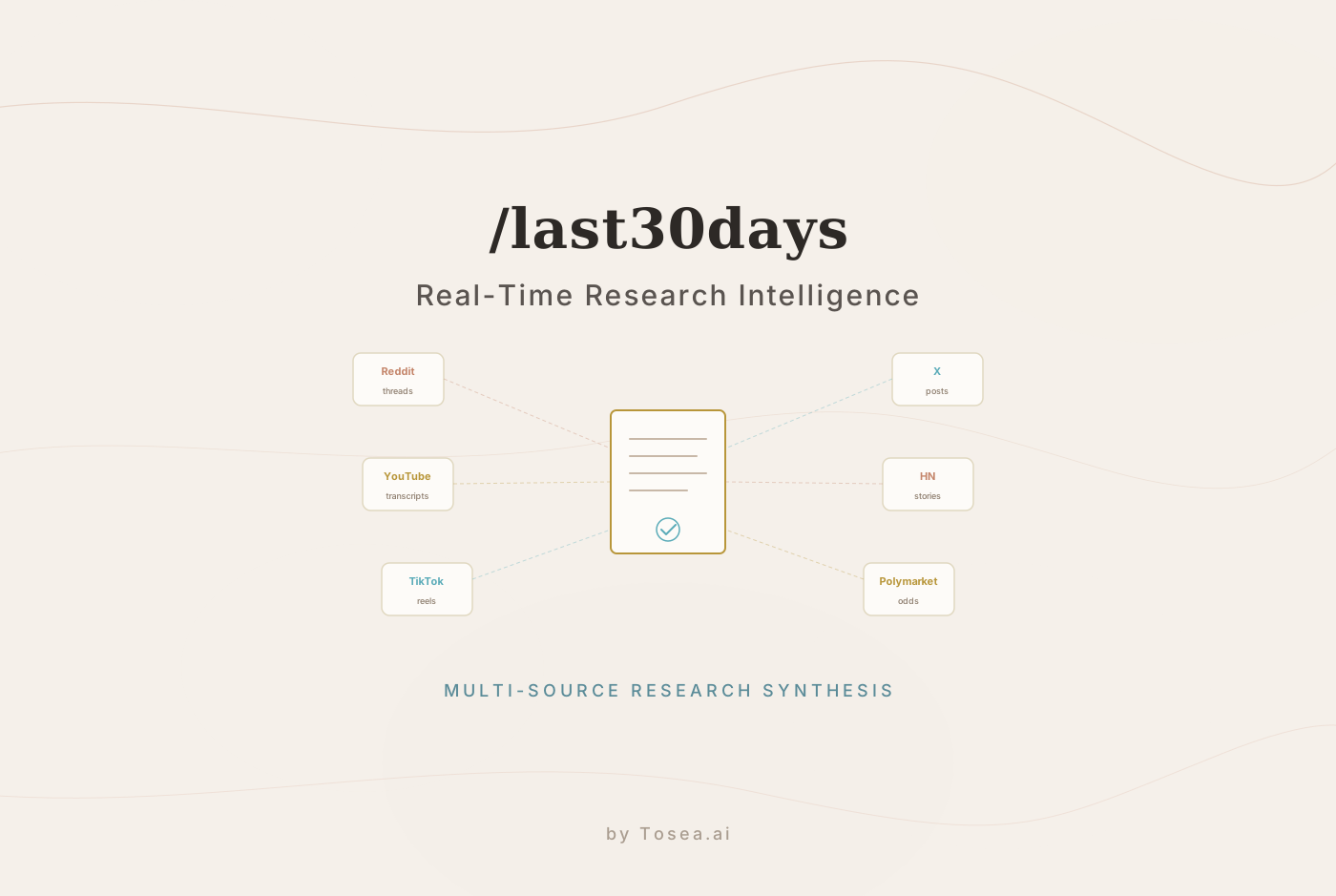
There is a skill built specifically for this problem. It is called /last30days, it has accumulated over 10,600 GitHub stars and 900 forks since launch, and it does something deceptively simple: it researches any topic across Reddit, X, YouTube, TikTok, Instagram, Hacker News, Polymarket, and the open web — all from the last 30 days — and synthesizes everything into a grounded, citation-backed summary.
If you have been exploring the broader landscape of AI agent skills and autonomous productivity tools, /last30days sits squarely in the research-and-intelligence tier — the kind of skill that feeds higher-quality inputs into everything else you do.
What Is /last30days?
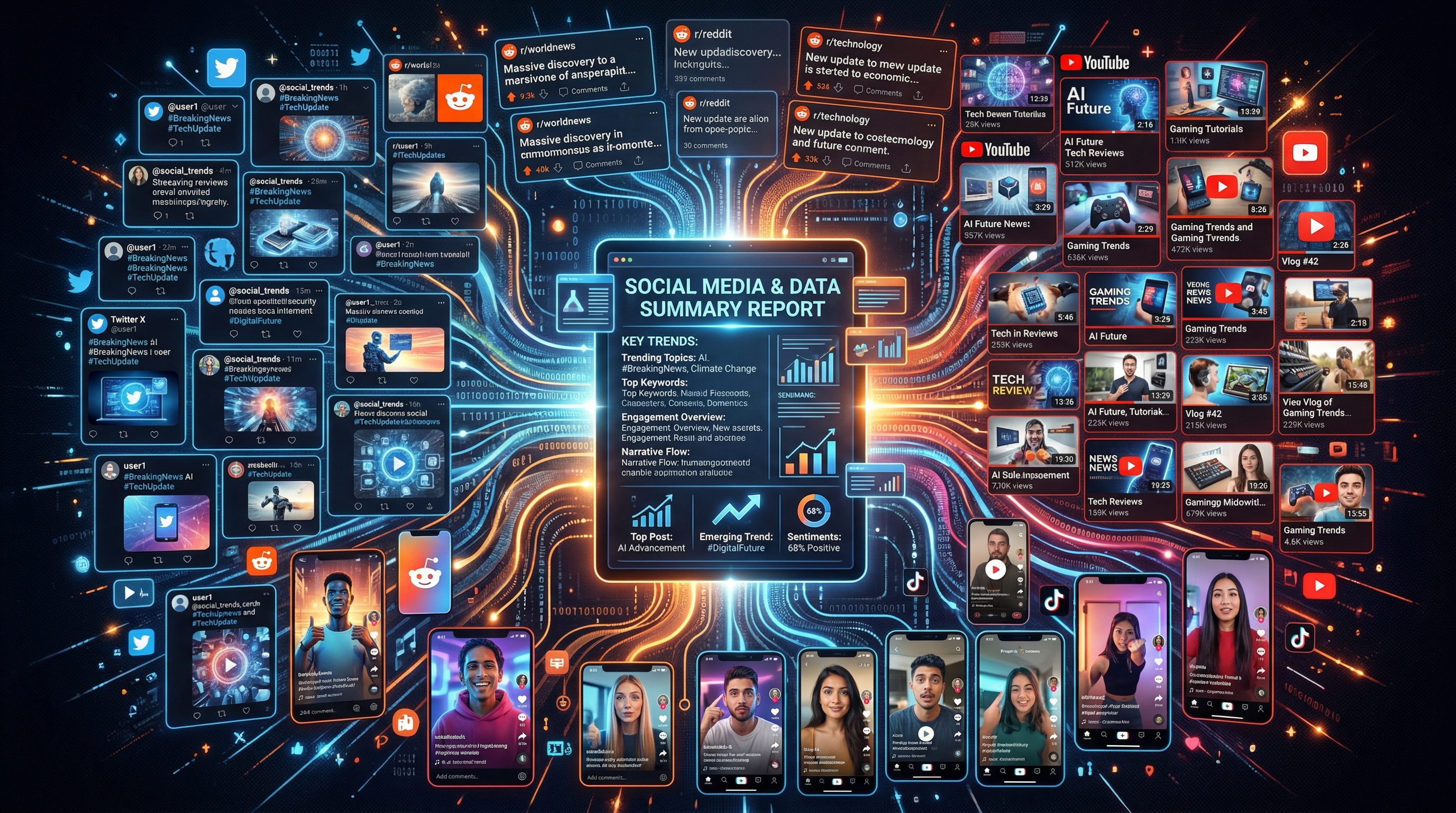
/last30days is an open-source AI agent skill built by developer mvanhorn. It is designed to work inside Claude Code, Gemini CLI, and OpenAI Codex CLI. At its core, it is a research tool — but not the kind that gives you a Wikipedia summary or a list of SEO articles from 2023.
The fundamental insight behind /last30days is that the most valuable information about any topic in 2026 is not sitting in official documentation or published blog posts. It is in the comments, the upvotes, the quote-tweets, the prediction market odds, and the video transcripts of people who are actively living and working with the subject right now.
/last30days finds that information, scores it by relevance and engagement, deduplicates it across sources, and synthesizes it into something you can actually act on.
What /last30days Can Do
Multi-Platform Research in a Single Command
When you run /last30days on any topic, the skill simultaneously searches across up to ten distinct sources:
Reddit threads with real upvote and comment counts pulled from the free JSON API, X posts with engagement data from the bundled Twitter GraphQL client, YouTube videos with auto-extracted transcripts via yt-dlp, TikTok and Instagram Reels through the ScrapeCreators integration, Hacker News stories and top comments via the Algolia API, Polymarket prediction markets with live odds and 24-hour trading volume, and web results for blogs, news, and documentation.
The output is not a raw dump of links. Every result passes through a multi-signal scoring pipeline that weights text relevance, engagement velocity, source authority, cross-platform convergence, and temporal recency. When the same story is trending on Reddit AND Hacker News AND X simultaneously, that convergence is flagged as a high-confidence signal.
Comparative Analysis Mode
Running /last30days cursor vs windsurf triggers comparative mode, which executes three parallel research passes and returns a side-by-side breakdown: strengths, weaknesses, a head-to-head comparison table, and a data-driven verdict pulled from actual community discussions. This is not a product spec comparison — it is what people who are actually using both tools are saying right now.
Prediction Market Intelligence
This is one of the most distinctive features in the tool. When you research any topic, /last30days automatically pulls live Polymarket prediction markets related to that subject. Search for anthropic odds and you get 11 live market positions spanning model benchmarks, IPO timing, valuation milestones, and regulatory risk — all with real trading volume and price movement data. This transforms /last30days from a sentiment tool into a financial intelligence layer.
Prompt Research for Any AI Tool
The original killer use case. Search /last30days prompting techniques for ChatGPT for legal questions and you get the actual strategies the community has converged on: hallucination prevention clauses, structured output formats, role assignment patterns, and epistemic humility enforcement — all sourced from the people who learned these lessons the hard way. Not documentation. Not tutorials. Real practitioners.
How to Install /last30days
Option 1: Claude Code Plugin (Recommended)
This is the fastest path to running the skill:
/plugin marketplace add mvanhorn/last30days-skill
/plugin install last30days@last30days-skill
Two commands. Done.
Option 2: Gemini CLI
gemini extensions install https://github.com/mvanhorn/last30days-skill.git
Option 3: Manual Installation
git clone https://github.com/mvanhorn/last30days-skill.git ~/.claude/skills/last30days
After cloning, configure your API keys in ~/.config/last30days/.env. The minimum viable setup requires one of the following: a ScrapeCreators API key for Reddit, TikTok, and Instagram research, or an OpenAI API key as a legacy Reddit fallback. X search works with either browser cookie auth (AUTH_TOKEN and CT0 copied from x.com developer tools) or an xAI API key as a fallback.
YouTube research activates automatically if yt-dlp is installed:
brew install yt-dlp  # macOS
pip install yt-dlp   # cross-platform
No API keys are required for Hacker News or Polymarket — both use free public APIs.
The Architecture Behind the Results
Understanding how /last30days works helps you use it more effectively.
Two-Phase Search
Phase one is broad discovery. The skill sends parallel queries across all configured sources, pulling raw results and scoring them against your topic. Phase two is smart supplemental search. From the phase one results, the skill extracts X handles and subreddit names it discovered organically, then runs targeted follow-up searches to find content that keyword matching alone would miss.
For example, searching for Dor Brothers triggers X handle resolution that finds @thedorbrothers, then pulls their posts directly — including viral tweets that never mention their name in the text. Without handle resolution, those posts are invisible to keyword search.
Subreddit Discovery
Rather than searching generic subreddits, /last30days uses relevance-weighted scoring to discover the communities where your topic actually lives. A search for Claude Code skills finds r/ClaudeAI, r/ClaudeCode, and r/openclaw rather than generic programming subreddits. A search for Kanye West finds r/hiphopheads and r/Kanye rather than r/AskReddit.
Cross-Platform Convergence
When the same story appears on multiple platforms, the skill flags it with cross-source indicators. This convergence detection is built on hybrid similarity scoring that matches content even when titles differ across platforms. A story that is trending on both Reddit and Hacker News with organic discussion on X is weighted significantly higher than a story that appears in only one place — because cross-platform traction is the strongest signal that something actually matters.
Five Use Cases Where /last30days Delivers Outsized Value

1. AI Tool Prompt Research
This is the original use case and still the strongest one. Any time a new AI tool launches — a new image model, a new coding assistant, a new video generator — the community spends the first few weeks reverse-engineering the optimal prompting patterns. /last30days aggregates those findings before they make it into any documentation or blog post. You get the community-validated techniques, not the marketing copy. For a broader look at how to pair prompt research with actual delivery, see our guide on the best AI prompts for document-to-PPT workflows.
2. Investment and Market Intelligence
Combining Polymarket odds with Reddit sentiment and X commentary gives you a three-dimensional view of how informed communities are thinking about a company, a regulatory decision, or a market trend. Running /last30days anthropic odds surfaces 11 live prediction markets, active Reddit threads, and analyst commentary from X — synthesized into a coherent picture of where money is actually moving. The prediction market layer, in particular, adds a dimension that no traditional research tool touches: real-dollar conviction signals.
3. Competitive Landscape Research
The comparative mode combined with multi-source synthesis makes /last30days genuinely useful for competitive intelligence. You get real user sentiment, not vendor-produced comparison pages. When developers on r/LocalLLaMA are debating Claude vs GPT-5 in actual production workflows, those discussions carry more signal than any benchmark chart. If you want to see how competitive research fits into a broader AI presentation creation workflow, the output from /last30days pairs naturally with visual deck builders.
4. Content Strategy and Trend Discovery
For anyone producing content — writers, marketers, educators, podcasters — /last30days identifies what specific questions people are actively asking and what formats are generating the most engagement right now. This is trend intelligence at the granularity of individual threads and posts, not broad category-level Google Trends data.
5. Technology Evaluation and Tool Selection
Before committing to a new tool or framework, running /last30days surfaces the gotchas, the workarounds, the community-validated best practices, and the honest negative reviews that never make it onto product pages. The Cursor rules best practices example in the repository documentation shows this clearly: the community converged on moving from a single .cursorrules file to a .cursor/rules/ directory with multiple .mdc files — a pattern that emerged from real developer experience, not official guidance. This kind of skill — surface the ground truth, skip the marketing — is part of a larger shift toward agentic, autonomous productivity.
Who Should Use /last30days
If your work depends on knowing what is current — not what was current last quarter — /last30days belongs in your toolkit. Founders preparing investor updates, analysts building market briefs, content strategists mapping audience interest, developers choosing between competing frameworks, and researchers tracking how public discourse shifts around a topic week by week will all find direct value. The skill is particularly well-suited to anyone already working inside Claude Code or Gemini CLI, since it drops into those environments with zero friction.
The Watchlist Mode: Always-On Research
For teams that need continuous monitoring rather than one-shot research, /last30days includes an open variant with watchlist functionality. Add competitors, specific people, or recurring topics to a watchlist. When paired with a cron job or an always-on agent like OpenClaw, /last30days re-researches them on a schedule and accumulates findings in a local SQLite database. For more on this kind of always-on agent architecture, see our guide on the best OpenClaw skills for productivity.
# Enable the open variant
cp variants/open/SKILL.md ~/.claude/skills/last30days/SKILL.md

# Add topics
last30 watch my biggest competitor every week
last30 watch Y Combinator hot companies end of April and end of September
This transforms /last30days from a research tool into a competitive intelligence system that runs in the background and surfaces relevant changes without requiring you to remember to check.
From Research to Presentation: Closing the Loop
Here is where most research workflows stall. /last30days produces an excellent Markdown briefing. It is comprehensive, it is cited, it is current. But a Markdown file is not a deliverable. You cannot send a .md file to a client. You cannot present a text document in a board meeting. The research is only as valuable as your ability to communicate it.
This is the problem Tosea.ai was built to address. Upload the Markdown output from /last30days — or any PDF, Word document, or research file — and Tosea.ai applies its Spatial Semantic Perception engine to understand the logical hierarchy of your content. It identifies which findings are primary strategic insights and which are supporting data points. It builds a narrative flow that holds together as a professional argument. And it formats everything into a consulting-grade PowerPoint presentation using templates inspired by the design standards of elite firms.
Every claim in the generated presentation links back to the source document through Absolute Traceability. If a stakeholder challenges a specific figure from your /last30days research during a meeting, you can trace it back to the original Reddit thread or Polymarket position it came from. The output is a native .pptx file, fully editable in PowerPoint or Google Slides, ready to open five minutes before your presentation starts. For a step-by-step look at how this works with academic papers specifically, see our research paper to slides workflow.
The complete research-to-delivery workflow looks like this:
- Run /last30days to gather current intelligence across eight social and prediction market sources.
- Review and refine the synthesized briefing.
- Upload to Tosea.ai and receive a presentation-ready deck in under a minute.
- Walk in with both the depth of real community intelligence and the polish of professional design.
/last30days handles what people are saying. Tosea.ai handles how you present it.
Get Started
/last30days is free and open source. The GitHub repository has everything you need to get running. Installation takes under two minutes with the Claude Code plugin, and the minimum viable setup requires a single API key.
If you want to go deeper on how skills like /last30days fit into the broader agentic ecosystem, our guide to converting PDFs and research documents into slides covers the full pipeline from raw research to finished deliverable. And when your research briefing is ready to become a presentation, Tosea.ai handles the last mile.