Seedance 2.5: Complete Guide to ByteDance's 30-Second AI Video Model
ByteDance previewed Seedance 2.5 at its FORCE conference: 30-second single-clip AI video, up to 50 multimodal references, and finer editing control — what was announced and how it compares.
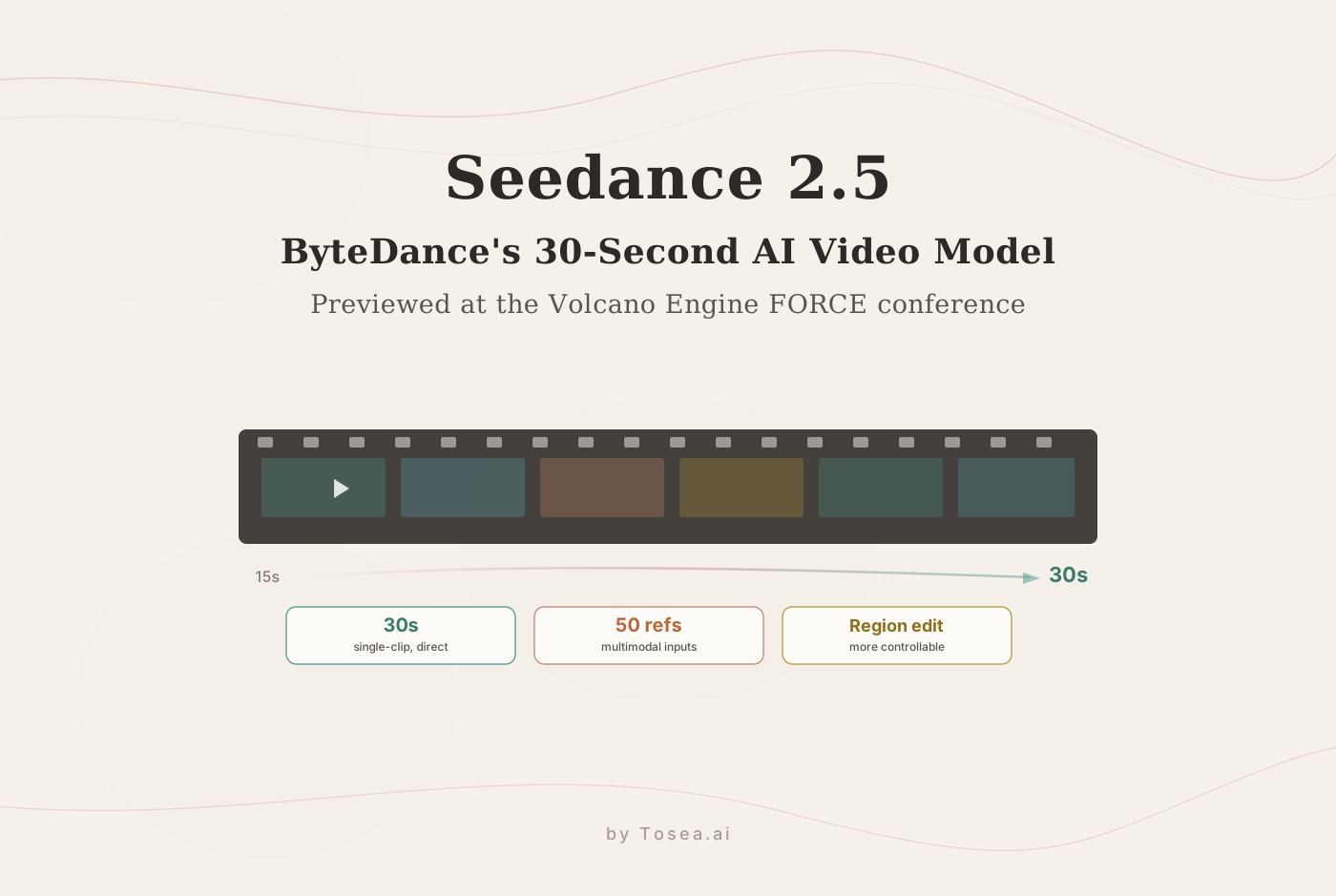
On June 23, 2026, at the Volcano Engine FORCE conference in Beijing, ByteDance previewed Seedance 2.5, the next version of its Doubao (豆包) video generation model. The headline is a number: a single, continuous 30-second clip generated directly, without stitching shorter segments together. Alongside it, the company showed support for up to 50 multimodal reference materials in one generation and a set of more controllable editing tools.
One important framing before anything else: this was a preview, not a public release. ByteDance demonstrated Seedance 2.5 on stage, said it is currently in enterprise beta, and set the public launch for early July 2026. That distinction matters for how you should read every claim below — these are vendor figures and stage demos, and the independent benchmark data that exists today still describes the shipping predecessor, Seedance 2.0. This guide separates what was announced from what has been measured, walks through each upgrade, and explains where Seedance sits in the broader AI video race.
What ByteDance Announced
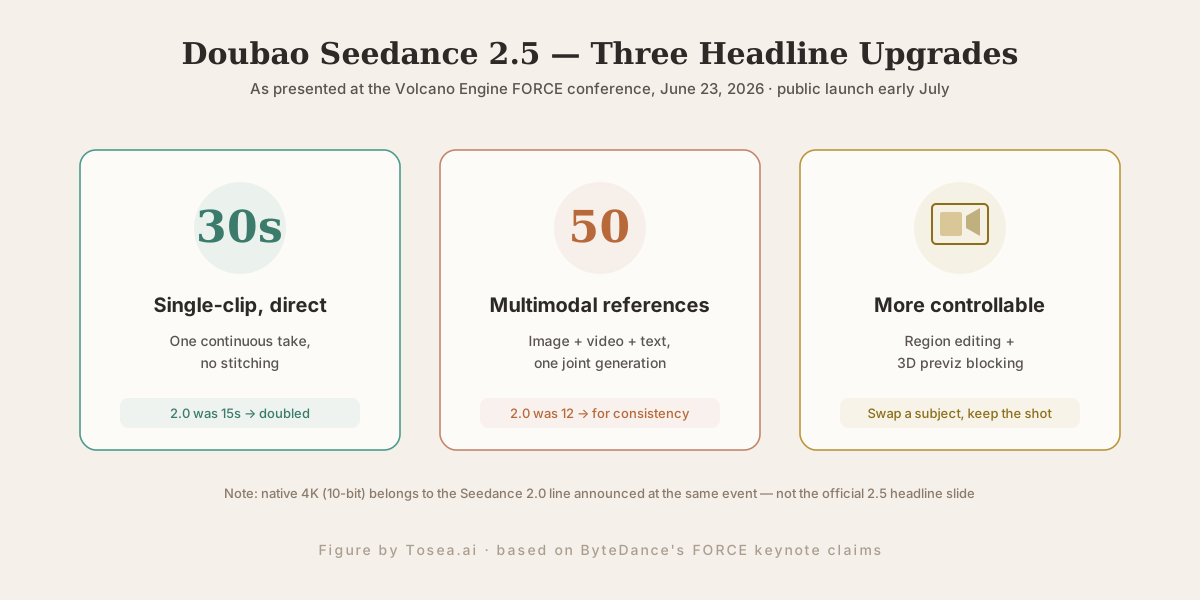
The official key visual for Seedance 2.5 leads with exactly three pillars — and it is worth noting what is and isn't on that slide. The headline upgrades are duration, reference capacity, and controllability:
| Capability | Seedance 2.0 | Seedance 2.5 (claimed) |
|---|---|---|
| Single-clip duration | 15 seconds | 30 seconds, generated directly |
| Reference materials | up to 12 | up to 50, full multimodal |
| Editing control | limited | region-level editing + 3D previz |
According to ByteDance's keynote, the 30-second clip is produced as one native generation rather than several short clips joined at the seams, and the 50-reference ceiling — combining images, video, and text in a single joint generation — is the highest the company is aware of in a commercial video model. Notably, native 4K is not on the Seedance 2.5 headline slide; the native-4K (and 4K 10-bit) pipeline belongs to the Seedance 2.0 line announced at the same event, even though several outlets have folded it into the 2.5 spec sheet. We flag that because accuracy matters here: the three things ByteDance actually put its name behind for 2.5 are length, references, and control.
The 30-Second Single Clip — and Why Length Is Hard
Doubling the maximum clip length from 15 to 30 seconds sounds incremental, but in video generation it is one of the harder problems. Most models hold quality over a few seconds and then drift — characters subtly change appearance, lighting shifts, motion loses physical plausibility. The common workaround is to generate several short clips and stitch them, which introduces visible seams and continuity errors at every join.
Generating a coherent 30-second take directly, if it holds up outside curated demos, removes a real production tax. For the formats ByteDance named on stage — film and TV pre-visualization, advertising, and short-form animated drama (漫剧) — a continuous half-minute is often the difference between a usable shot and a clip that needs manual repair. It is the same shift toward longer, multi-shot coherence that the 2.0 generation began, pushed further. The honest caveat: "single 30-second clip" is a ceiling, and sustained quality across that full window is exactly what independent testing will need to confirm after the July launch.
50 Multimodal References — the Consistency Play
The jump from 12 to 50 reference inputs is the upgrade most relevant to professional work. A reference material can be an image, a video, or text, and Seedance 2.5 can take up to 50 of them into a single joint generation. In practice, that is a bid for consistency: feed the model your character turnarounds, your product shots, your brand colors, and your style frames, and it has far more grounding to keep the same face, the same packaging, and the same look across a sequence.
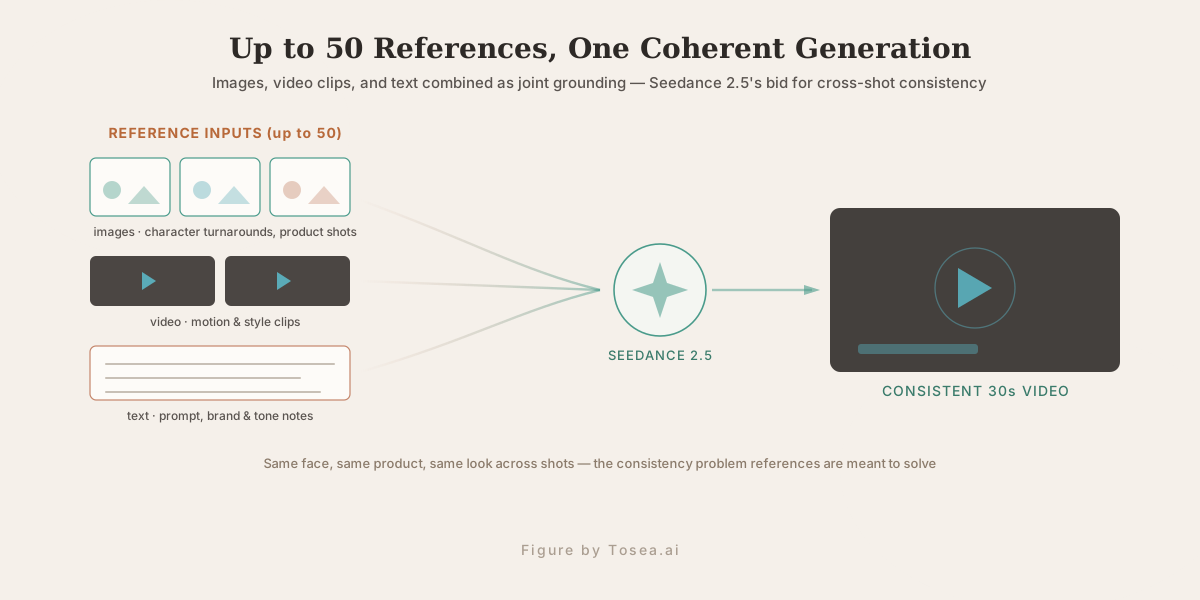
This is where video generation is converging with what high-end image models already do for brand consistency. For an advertiser, character and product fidelity across shots is the entire ballgame — a model that drifts on the logo is unusable regardless of how cinematic the motion is. Fifty references is a lot of control surface, and if it delivers, it pushes Seedance toward the kind of repeatable, on-brand output that production teams actually need rather than one-off impressive clips.
More Controllable: Region Editing and 3D Previz
The third pillar is editing. ByteDance demonstrated region-level editing — replacing a subject, background, or product inside an existing shot without changing the original motion, camera move, or lighting. That is a meaningful capability for iteration: instead of regenerating an entire clip and hoping the rest survives, you swap one element and keep everything you already approved. For commercial work — localizing a product into a different market, or swapping a model — that targeted edit is often the whole job.
The keynote also showed a 3D white-model (白模) previsualization feature, letting creators block out shots and camera moves in a rough 3D scene before committing to a full generation. This is a director's tool: it brings the storyboard-and-blocking stage of traditional production into the AI pipeline, so camera language is planned rather than discovered by trial and error.
How It Compares: the Shipping Version Already Leads
Here is the part where discipline matters most. There is no independent benchmark for Seedance 2.5 yet — it has not shipped publicly, and any 2.5 Elo or arena score circulating before launch should be treated as unverified. What we can report is where the current, shipping Seedance 2.0 stands on a neutral, blind human-preference leaderboard.
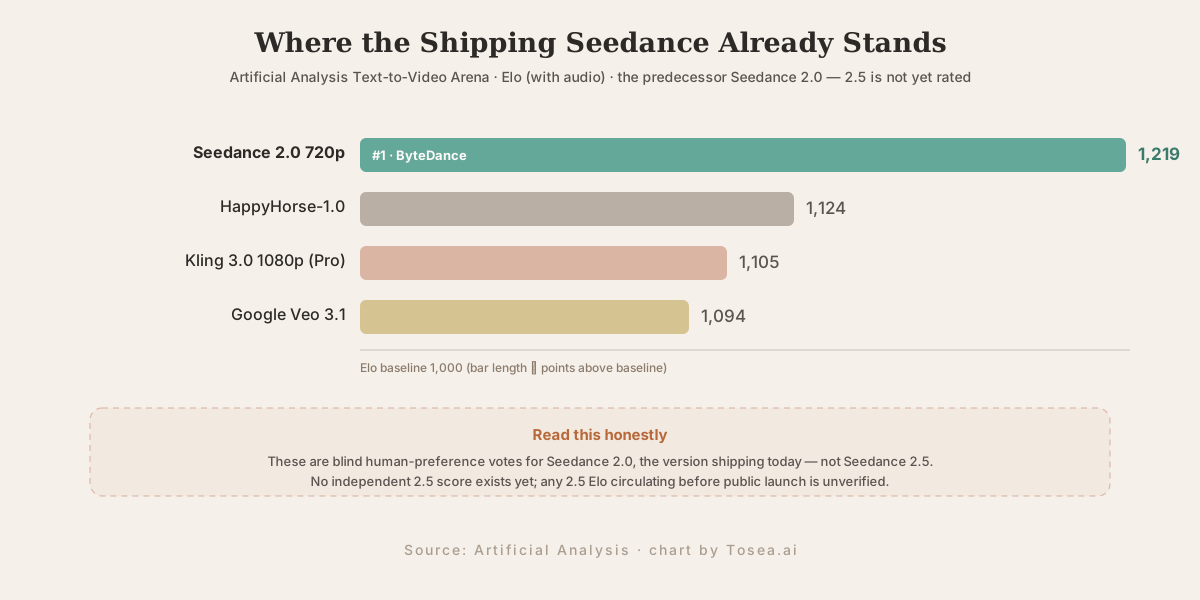
On Artificial Analysis's Text-to-Video Arena, which ranks models by blind human votes, Seedance 2.0 (listed as "Dreamina Seedance 2.0 720p") currently sits at #1 with an Elo of 1,219 among models with audio — ahead of HappyHorse-1.0 (1,124), Kling 3.0 1080p Pro (1,105), and Google Veo 3.1 (1,094). It leads the Image-to-Video board as well. A first-place arena standing reflects aggregate human preference on sampled prompts — not a guaranteed win on every brief, and emphatically not a 2.5 number. But it tells you the baseline Seedance 2.5 is building on is already at or near the front of the field, which raises the bar for what an upgrade has to prove.
The strategic question is whether Seedance 2.5's longer, more-referenced, more-editable output translates the 2.0 line's preference lead into a durable advantage over Veo, Kling, and Sora as those competitors iterate. We'll know in July when independent testers can run it.
Pricing and the Cost Story
ByteDance has not published Seedance 2.5 pricing — that will come with the early-July launch. For context, Artificial Analysis normalizes the shipping Seedance 2.0 to roughly $9 per minute of 1080p video, against about $24 per minute for Google Veo 3.1 and roughly $20 per minute for Kling 3.0 Pro. If 2.5 lands anywhere near that band, ByteDance's pitch is not just quality but quality-per-dollar — the same cost-aggressive posture Volcano Engine took across its model lineup at FORCE.
That cost framing was a theme of the whole event. Volcano Engine said its platform now handles around 180 trillion tokens per day, claimed roughly 49.5% of China's public-cloud large-model market, and described a "trillion-token club" of more than 200 enterprise customers. Seedance is one piece of a portfolio strategy: lead on independent quality benchmarks, then undercut Western frontier models on price.
The Rest of the FORCE Lineup
Seedance 2.5 did not launch alone. At the same conference ByteDance also previewed Seedream 5.0, the next version of its image model; Seed-Audio 1.0, an audio generation model; and Doubao 2.1 Pro, its updated frontier LLM, which the company positioned against Claude Opus on several coding and agent benchmarks (claiming parity or an edge on Terminal-Bench, SciCode, and MCP-Atlas) at a fraction of the cost. Taken together, it is a full-stack multimodal release — text, image, audio, and video — aimed at giving builders a single, cheaper provider for an entire generation pipeline. For our purposes, the video model is the headline, but the surrounding image and audio models matter because real production rarely needs just one modality.
Who Should Care About Seedance 2.5
The upgrades ByteDance led with are not aimed at hobbyists making one-off clips — they target people for whom consistency and iteration are the whole job. Four groups stand to gain most.
Advertisers and brand teams are the clearest fit. The 50-reference ceiling exists precisely so a campaign can hold a product, a logo, and a spokesperson on-model across every shot, and region-level editing means localizing the same ad for a new market — swapping a product or a model without touching the camera move — becomes a targeted edit rather than a full reshoot. Film and TV pre-visualization teams get the 3D white-model previz and longer takes, which bring storyboarding and camera blocking into the generation step instead of leaving them to chance. Short-form animation and 漫剧 (animated drama) studios, a fast-growing category in China, need exactly the multi-shot narrative coherence a continuous 30-second clip enables. And performance marketers producing volume benefit from the cost posture: if 2.5 lands near the 2.0 line's pricing, the economics of generating many on-brand variants shift decisively.
Consider a concrete case. A consumer-electronics brand needs the same 20-second hero spot in four markets. With a drift-prone, short-clip model, that is four near-from-scratch generations plus manual continuity fixes. With Seedance 2.5's reference stack holding the product fixed and region editing swapping only the on-screen talent and packaging copy, the second, third, and fourth versions become edits of the first — same motion, same lighting, different market. That is the workflow ByteDance is selling, and it is why the "boring" upgrades (references and editing) may matter more than the headline 30 seconds.
The counterpoint, in fairness: none of this is proven outside the keynote yet. Demos are curated, and the model is still in enterprise beta. The groups above have the most to gain if the public release holds up — which is the right reason to watch July closely rather than to commit a pipeline today.
What Seedance 2.5 Means for AI Slide Generation
A 30-second, multi-reference, editable video model might look distant from presentation software, but the connection is direct. Slides and video are both structured visual media assembled from a brief, and the capabilities ByteDance is pushing — consistency across many references, controllable region-level edits — are exactly what separates usable AI presentation visuals from one-off novelty.
The most immediate overlap is brand consistency. The 50-reference mechanism that keeps a character on-model across a video is the same problem an AI slide generator solves when it has to keep your logo, palette, and chart style identical across forty slides. As Seedance-class motion makes its way into animated slide backgrounds and short embedded clips, the per-asset craft of video generation starts to feed the per-deck craft of presentation design — and region-level editing is the deck equivalent of "fix this one slide without disturbing the other thirty-nine."
The line worth drawing is between an asset and a narrative. Seedance generates a beautiful shot; it does not know what your quarterly report is trying to argue. That document-grounded reasoning — turning a source file into a structured, faithful slide deck — is a different layer. Tosea.ai sits there as a document-to-PPT orchestration system: it parses your report, paper, or dataset, builds a structured outline, and renders the deck while keeping every claim traceable to the source. Generative models like Seedance and Seedream increasingly supply the visuals; the orchestration layer supplies the argument. If you want to see that source-to-slides path concretely, our PDF-to-PowerPoint guide walks through it.
Frequently Asked Questions
Is Seedance 2.5 available now?
Not to the public. It was previewed at the Volcano Engine FORCE conference on June 23, 2026, and is in enterprise beta. ByteDance set the public launch for early July 2026. Until then, the version you can actually use is Seedance 2.0.
Does Seedance 2.5 really generate 30-second videos?
ByteDance claims a single, continuous 30-second clip generated directly — double the 15-second ceiling of Seedance 2.0, and without stitching shorter segments. That was demonstrated on stage; independent testers will confirm how well quality holds across the full 30 seconds once the model is public.
What about native 4K?
Native 4K (including 4K 10-bit) was part of the Seedance native-4K upgrade discussed at FORCE, but it is tied to the Seedance 2.0 line — it is not on the official Seedance 2.5 headline slide, which leads with duration, 50 references, and editing control. Some coverage has merged the two; we keep them separate because that is what the official materials show.
How does it compare to Veo, Kling, and Sora?
There is no Seedance 2.5 benchmark yet. The shipping Seedance 2.0 currently leads the Artificial Analysis Text-to-Video and Image-to-Video arenas on blind human preference, ahead of Veo 3.1 and Kling 3.0 Pro, and at a lower normalized price (~$9/min of 1080p vs ~$24 for Veo and ~$20 for Kling). Whether 2.5 extends that lead is an open question until July.
What else did ByteDance announce at FORCE?
Seedream 5.0 (image), Seed-Audio 1.0 (audio), and Doubao 2.1 Pro (LLM), alongside platform numbers like ~180 trillion tokens processed per day and a claimed ~49.5% share of China's public-cloud large-model market.
What to Watch in July
Seedance 2.5 is a confident set of claims from the team whose current model already tops the independent video arenas. The upgrades it leads with — longer single takes, far more reference control, and targeted editing — are the right ones for professional production, where consistency and iteration matter more than a single cinematic clip. But the gap between a polished stage demo and a model that holds quality across 30 seconds on your prompts is exactly what the early-July public launch will reveal.
When it ships, the things to test are concrete: does the 30-second clip stay coherent end to end, do 50 references actually hold a character and a brand across shots, and does region editing leave the rest of the frame untouched. Until then, treat the numbers as ByteDance's, not the field's. For teams building the document-to-deck side of this same generative shift, you can explore how structured source material becomes finished slides at Tosea.ai.
Sources
- 火山引擎宣布 Seedance 2.5 下月上线,视频生成迈入长序列时代 — PingWest (品玩), June 23, 2026
- 豆包视频生成模型 Seedance 2.5 发布:原生直出翻倍至 30 秒 — 快科技 (MyDrivers), June 23, 2026
- Seedance 2.5 正式发布:30 秒、50 个参考素材、原生 4K — SegmentFault, June 23, 2026
- Text-to-Video Leaderboard — Artificial Analysis — independent arena (Seedance 2.0 standing)
- 字节跳动发布豆包视频生成模型 Seedance 2.5 预计 7 月初上线 — ChinaZ, June 23, 2026