155 Best Computer Science Topics for Students, Research, and Classroom Presentations
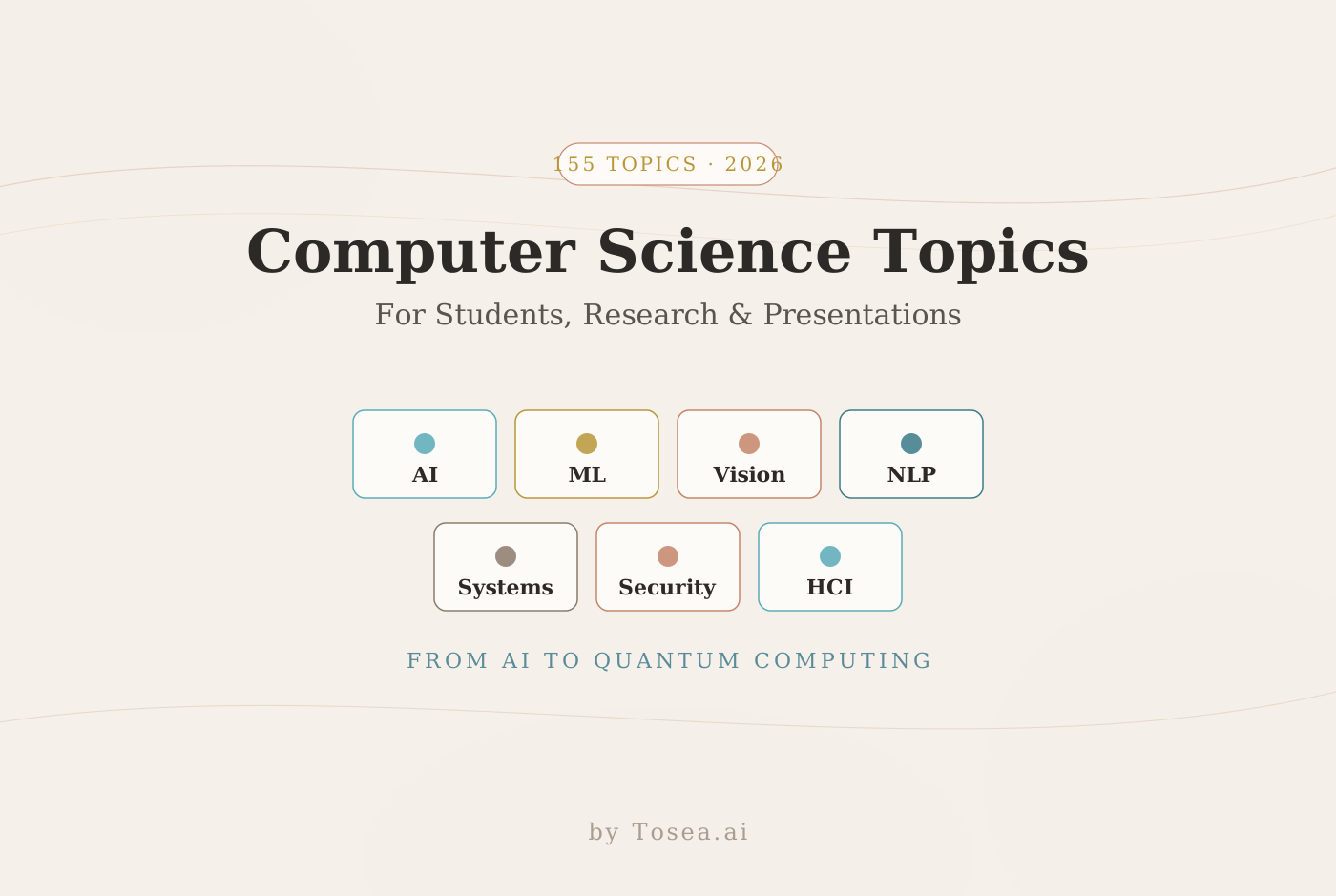
155 best computer science topics for students, research, theses, and classroom presentations — from AI, machine learning, and computer vision to cybersecurity, systems, and quantum computing.
Finding the right computer science topics can be harder than it looks, because computer science evolves faster than almost any other academic field. New breakthroughs in artificial intelligence, machine learning, cybersecurity, distributed systems, robotics, computer vision, and human-computer interaction emerge every year. A topic that seemed cutting-edge three years ago may already be considered standard knowledge today.
For students, researchers, and educators, selecting the right frontiers of computer science topics is often the first challenge. The ideal topic should be academically meaningful, supported by recent research, visually explainable, and relevant to real-world applications. Whether you are preparing a classroom presentation, a conference talk, a thesis proposal, a journal club discussion, or a research seminar, choosing the right topic can significantly improve audience engagement and learning outcomes.
This guide provides more than 150 carefully selected computer science topics inspired by emerging research trends across leading venues such as ACM Computing Surveys, Communications of the ACM, Nature Machine Intelligence, IEEE Transactions, NeurIPS, ICML, ICLR, CVPR, KDD, AAAI, and USENIX. The goal is not simply to provide a list of titles — it is to help you identify research directions that are relevant, future-oriented, and presentation-friendly. If your end goal is a talk rather than a paper, our research paper to slides workflow covers how to move from a chosen topic to a finished deck.
What Makes a Good Computer Science Topic
The strongest computer science topics usually share several characteristics. They address an important problem, they have active research communities, they offer practical applications, and they include enough technical depth to be interesting while remaining understandable for the intended audience.
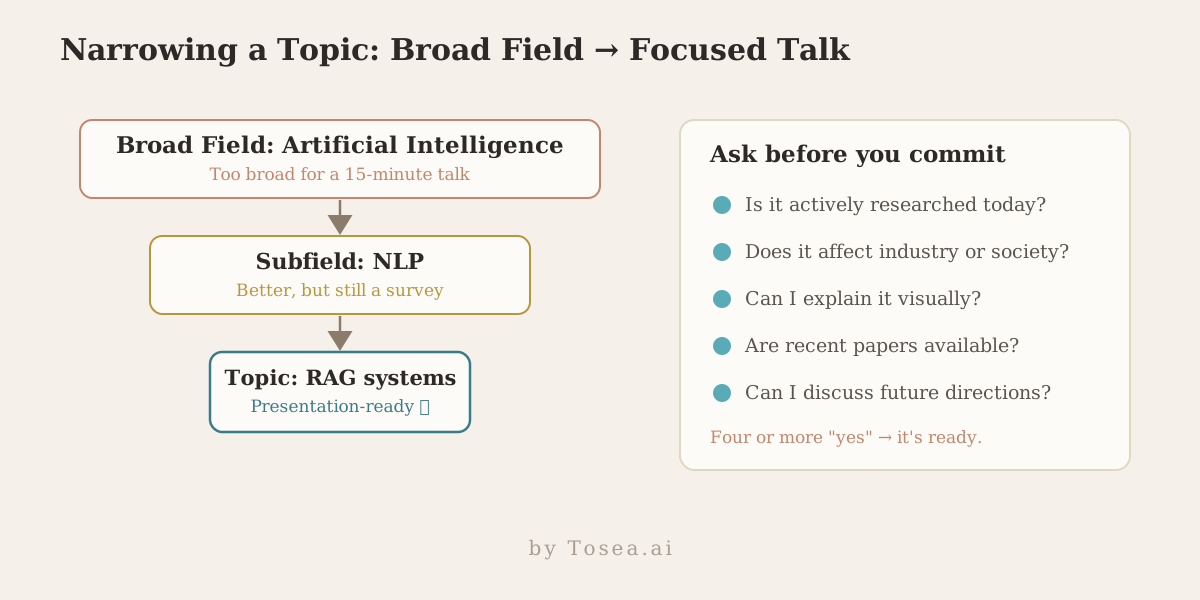
For example, "artificial intelligence" is too broad for a 15-minute presentation. A more focused topic such as retrieval-augmented generation for large language models provides a clear research problem, recent literature, practical use cases, and measurable outcomes. The narrower the scope, the easier it is to build a talk that actually teaches something.
When selecting a topic, ask:
- Is this problem actively researched today?
- Does it affect industry or society?
- Can I explain the core concepts visually?
- Are there recent papers available?
- Can I answer meaningful questions about future directions?
If you can answer "yes" to at least four of these, the topic is presentation-ready. If you find yourself answering "no" to "can I explain it visually," the topic may be better suited to a written report than a slide deck.
How We Selected These Topics
The topics below are not pulled from a generic keyword list. They are organized around research directions actively discussed at the venues that shape modern computer science. We grouped them by subfield so you can jump straight to the area that matches your course, lab, or interest, and we favored topics that have both recent peer-reviewed literature and a clear real-world hook — the two ingredients that make a talk credible and engaging.
The primary sources of inspiration include:
- ACM Computing Surveys — comprehensive survey articles that map entire subfields
- Communications of the ACM — accessible coverage of major research and industry trends
- Nature Machine Intelligence and Nature Computational Science — high-impact interdisciplinary AI and computing research
- IEEE Computer Society — systems, security, and engineering-focused publications
- NeurIPS, ICML, and ICLR — the leading machine learning conferences
- CVPR — the flagship computer vision venue
- USENIX — systems, security, and operating-systems research
These venues represent many of the most influential ideas shaping the field today, which makes their topics a reliable foundation for student presentations, research proposals, and classroom discussions alike.
Best Artificial Intelligence Topics
Artificial intelligence remains the most active area in computer science, and it offers topics for every level — from introductory overviews to research-grade deep dives. The subjects below balance technical depth with strong real-world relevance.
- Foundation models and their limitations
- Retrieval-augmented generation systems
- Multimodal large language models
- Agentic AI systems
- AI reasoning and planning
- Tool-using language models
- Long-context language models
- AI hallucination reduction techniques
- Explainable artificial intelligence
- AI alignment and safety
- Constitutional AI
- Human feedback in AI training
- AI for scientific discovery
- Autonomous research agents
- AI-assisted software engineering
- Reinforcement learning for real-world applications
- AI governance and regulation
- Federated artificial intelligence
- AI benchmarking methodologies
- Future directions of artificial intelligence
Best Machine Learning Topics
Machine learning topics work well when you can connect a method to a concrete result. Each subject below maps to an active body of literature and a measurable outcome you can show on a results slide.
- Self-supervised learning
- Representation learning
- Contrastive learning methods
- Few-shot learning
- Meta-learning systems
- Continual learning
- Transfer learning in production systems
- Synthetic data generation
- Model compression techniques
- Knowledge distillation
- Sparse neural networks
- Bayesian machine learning
- Causal machine learning
- Graph neural networks
- Reinforcement learning in robotics
- AutoML systems
- Foundation model evaluation
- Machine learning interpretability
- Privacy-preserving machine learning
- Scalable machine learning infrastructure
Best Computer Vision Topics
Computer vision is one of the most visually explainable subfields, which makes it ideal for presentations. Diagrams, before-and-after images, and live demos translate directly into compelling slides.
- Vision transformers
- Diffusion models for image generation
- Text-to-image systems
- Video understanding models
- Image segmentation technologies
- Medical image analysis
- AI-powered radiology systems
- Autonomous driving perception systems
- 3D computer vision
- Neural rendering
- Gaussian splatting
- Visual question answering
- Scene understanding
- Multi-camera perception
- Future directions of computer vision
Best Natural Language Processing Topics
Natural language processing sits at the center of today's AI boom. These topics let you connect classic NLP problems to the large-language-model systems audiences already use every day.
- Retrieval-augmented generation
- Long-context document understanding
- AI summarization systems
- Scientific document understanding
- AI fact-checking techniques
- Multilingual language models
- Machine translation advances
- Speech recognition systems
- Conversational AI
- Knowledge-grounded dialogue systems
- Information extraction
- Question-answering systems
- AI search technologies
- Semantic search engines
- Future of natural language processing
Best Systems and Infrastructure Topics
Systems and infrastructure topics appeal to audiences interested in how software runs at scale. They pair well with architecture diagrams and real performance numbers.
- Cloud-native computing architectures
- Serverless computing platforms
- Edge computing and distributed intelligence
- Large-scale distributed systems
- Modern database architectures
- Vector databases for AI applications
- Data lakehouse architectures
- Kubernetes and container orchestration
- Infrastructure as code
- Site reliability engineering
- High-performance computing
- Energy-efficient computing systems
- Green data centers
- Distributed storage systems
- Future trends in cloud infrastructure
Best Cybersecurity Topics
Cybersecurity topics are inherently engaging because the stakes are concrete and the threats are constantly evolving. They suit both introductory talks and advanced research seminars.
- Zero trust security architecture
- AI-powered cybersecurity systems
- Adversarial machine learning attacks
- Deepfake detection technologies
- Privacy-preserving computation
- Secure multi-party computation
- Homomorphic encryption
- Identity and access management
- Supply chain security
- Ransomware defense strategies
- Security challenges of large language models
- Blockchain security
- Cloud security best practices
- Cybersecurity risk assessment
- Future cybersecurity challenges
Best Human-Computer Interaction Topics
Human-computer interaction connects technical systems to the people who use them. These topics work especially well for audiences from design, psychology, or product backgrounds.
- Human-centered AI design
- Explainable AI interfaces
- AI copilots and productivity tools
- Mixed reality user experiences
- Virtual reality learning environments
- Brain-computer interfaces
- Emotion-aware computing
- Accessibility in digital products
- Conversational user interfaces
- Intelligent recommendation systems
- Human-AI collaboration
- Digital well-being and technology use
- Attention and interface design
- Adaptive user interfaces
- Future human-computer interaction paradigms
Best Emerging Computer Science Research Topics
For research proposals and advanced seminars, the topics below sit at the genuine frontier — areas where the open questions still outnumber the answers.
- AI agents that perform multi-step tasks
- Autonomous software engineering systems
- Scientific foundation models
- AI for biology and drug discovery
- Generative design systems
- AI-powered robotics
- Embodied artificial intelligence
- Neuromorphic computing
- Quantum machine learning
- Quantum error correction
- Post-quantum cryptography
- Digital twins for complex systems
- Synthetic environments for AI training
- World models for autonomous systems
- Self-improving AI systems
- Multi-agent collaboration frameworks
- AI-powered scientific simulation
- Knowledge graph reasoning systems
- Open-source foundation models
- Future frontiers of computer science
Easy Computer Science Topics for Students
If you are presenting to a general audience or giving an introductory talk, the topics below are approachable, visual, and easy to explain without heavy mathematics.
- How search engines work
- How recommendation systems work
- The basics of artificial intelligence
- How chatbots understand language
- How social media algorithms work
- What is cloud computing
- What is cybersecurity
- How facial recognition works
- The science behind QR codes
- How GPS navigation works
- What is blockchain
- How online payments work
- How streaming platforms deliver video
- How computer vision recognizes images
- How machine learning learns from data
- What is data science
- The evolution of programming languages
- How mobile apps communicate with servers
- The history of the internet
- How AI changes everyday life
Who These Topics Are For
Different audiences need different topics, so it helps to match the subject to the setting before you start building slides.
Undergraduate students preparing a course presentation usually do best with the "easy" topics or a focused slice of a larger field — for example, "how recommendation systems work" rather than "machine learning" in general. These topics are visual, require minimal prerequisites, and leave room for a confident Q&A.
Graduate students and PhD candidates preparing a seminar, journal club, or thesis proposal should lean toward the machine learning, NLP, systems, and emerging-research lists. These topics connect to current papers and let you demonstrate command of an active literature — which is exactly what examiners and lab audiences look for. If a defense is on your horizon, pair your topic choice with our thesis defense presentation guide and our academic conference 15-minute talk guide.
Educators and instructors building a lecture or assignment can use the category structure above as a syllabus map, assigning one subfield per week and letting students pick a numbered topic to present.
Researchers and professionals scoping a talk for a conference or internal tech share will find the emerging-research and systems lists most useful, since those topics carry the novelty and depth that specialist audiences expect.
How to Turn a Computer Science Topic Into a Presentation
A strong presentation is not simply a collection of technical facts. The most effective talks follow a clear narrative structure that takes the audience from a problem to its implications. The eight-slide skeleton below works for classroom presentations, research seminars, thesis defenses, technical workshops, conference talks, and journal clubs alike.
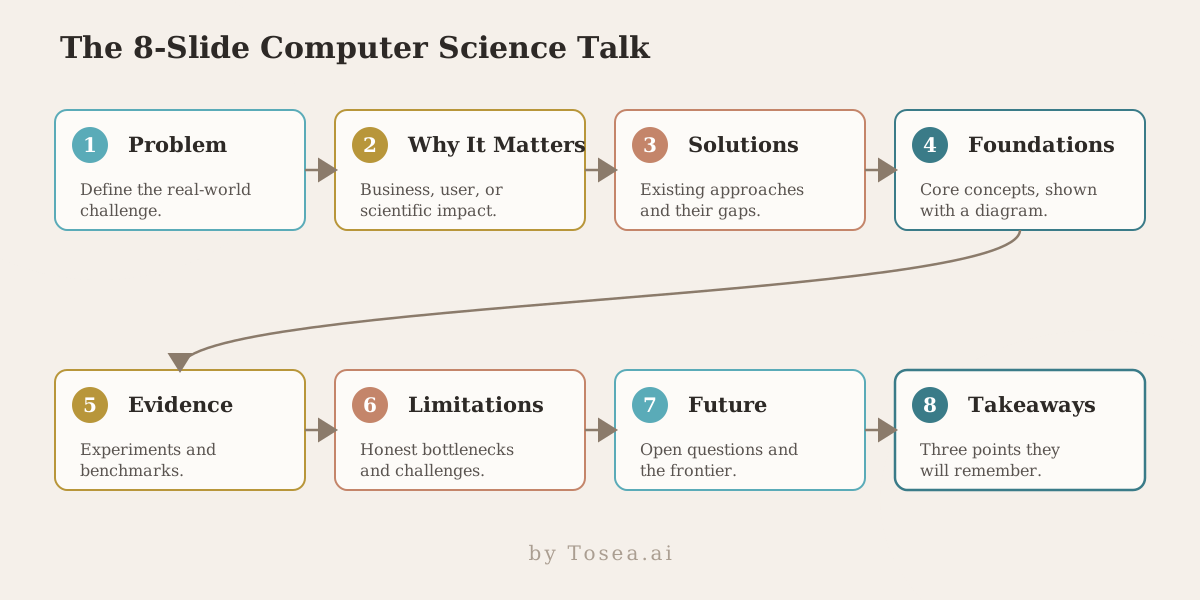
Slide 1: Define the Problem
Start with a real-world challenge. Example: Why do large language models still hallucinate?
Slide 2: Why It Matters
Explain the business impact, user impact, or scientific significance. Give the audience a reason to care before you introduce any technical detail.
Slide 3: Current Solutions
Introduce the existing approaches and technologies, and briefly note where they fall short.
Slide 4: Technical Foundations
Explain the core concepts behind the system. This is the slide where a clear diagram does more than a paragraph of text.
Slide 5: Research Evidence
Present experiments, benchmarks, or case studies — the data that supports your argument.
Slide 6: Limitations
Discuss current bottlenecks and challenges honestly. Acknowledging limitations builds credibility.
Slide 7: Future Directions
Show emerging opportunities and open questions, connecting your topic back to the frontier.
Slide 8: Key Takeaways
Summarize the most important lessons in three points the audience can remember.
The technology you use to build the deck helps you create slides faster, but the structure is what determines whether the audience learns anything meaningful. A strong outline always beats a collection of disconnected slides. For a discipline-tested approach to organizing technical findings, see our breakdown of the McKinsey way to present research findings, and for keeping every claim traceable to a source, our zero-hallucination AI slides guide.
Q&A: Frontiers of Computer Science Topics
What are the best computer science topics for students?
The best topics combine strong real-world relevance with clear technical concepts. Artificial intelligence, machine learning, cybersecurity, cloud computing, computer vision, and software engineering are among the most popular and accessible choices.
What are the most current research topics in computer science?
Current research frontiers include large language models, AI agents, multimodal systems, retrieval-augmented generation, quantum computing, AI safety, autonomous robotics, and privacy-preserving machine learning.
How do I choose a computer science presentation topic?
Start by identifying a problem you find interesting, then narrow the scope. Instead of "artificial intelligence," choose a specific topic such as AI hallucination reduction or retrieval-augmented generation. A narrow topic is far easier to present well than a broad one.
What computer science topics are easiest for classroom presentations?
Search engines, recommendation systems, cloud computing, cybersecurity basics, social media algorithms, and introductory artificial intelligence are usually easy for beginners to explain with minimal mathematics.
What are the best computer science topics for research projects?
Research projects often focus on emerging areas such as AI safety, machine learning systems, quantum computing, distributed systems, cybersecurity, and human-AI collaboration — areas where open questions still outnumber settled answers.
Can AI help create computer science presentations?
Yes. AI can help summarize research papers, organize technical content, generate speaker notes, and create slide structures. Technical accuracy should always be verified against primary sources, which is why source-grounded tools matter more than generic generators.
How do I avoid misinformation in AI-generated presentations?
Always review original papers, benchmark reports, technical documentation, and academic publications. AI-generated summaries should support your understanding, not replace source verification.
Which computer science fields are expected to grow the fastest?
Artificial intelligence, cybersecurity, cloud infrastructure, robotics, quantum computing, and AI-powered software engineering are widely expected to remain major growth areas over the next decade.
Turn Computer Science Research Into Slides With Tosea AI
Once you select one of these frontiers of computer science topics, the next challenge is turning research papers, technical reports, survey articles, benchmarks, and documentation into a presentation.
Modern computer science papers are often dense, highly technical, and filled with architectures, diagrams, tables, equations, and experimental results. Converting these materials into slides manually can take hours, and it is easy to lose the logical thread of the source along the way.
Tosea.ai helps students, researchers, educators, and technical teams transform research papers, PDFs, technical reports, whitepapers, and lecture notes into editable presentation slides. Instead of starting from a blank deck, you upload a document and generate a structured slide draft that preserves the key ideas, evidence, and logical flow of the source material. For the mechanics of moving from a source document to a finished file, see our convert PDF to PowerPoint guide, and for students specifically, the free trial guide for academics.
This document-to-PPT workflow is especially useful for research seminars, technical conference talks, graduate presentations, PhD defenses, journal clubs, literature reviews, and computer science lectures. Unlike generic slide generators, Tosea AI is built for cases where structure, source grounding, and technical accuracy matter — exactly the requirements of a credible computer science talk.
Looking for topics in adjacent fields? Browse our companion lists of best economics topics and best biology and medical topics for students, research, and presentations.
Sources
- ACM Computing Surveys — Association for Computing Machinery
- Communications of the ACM — Association for Computing Machinery
- Nature Machine Intelligence — Nature Portfolio
- Nature Computational Science — Nature Portfolio
- IEEE Computer Society — IEEE
- NeurIPS — Conference on Neural Information Processing Systems
- ICML — International Conference on Machine Learning
- ICLR — International Conference on Learning Representations
- CVPR — Computer Vision and Pattern Recognition — Computer Vision Foundation
- USENIX — The Advanced Computing Systems Association