120 Best Sociology and Political Science Topics for Research Papers and Presentations
120 sociology and political science topics for research papers, theses, and classroom presentations, plus how to find a research gap, choose data, and structure the slides.
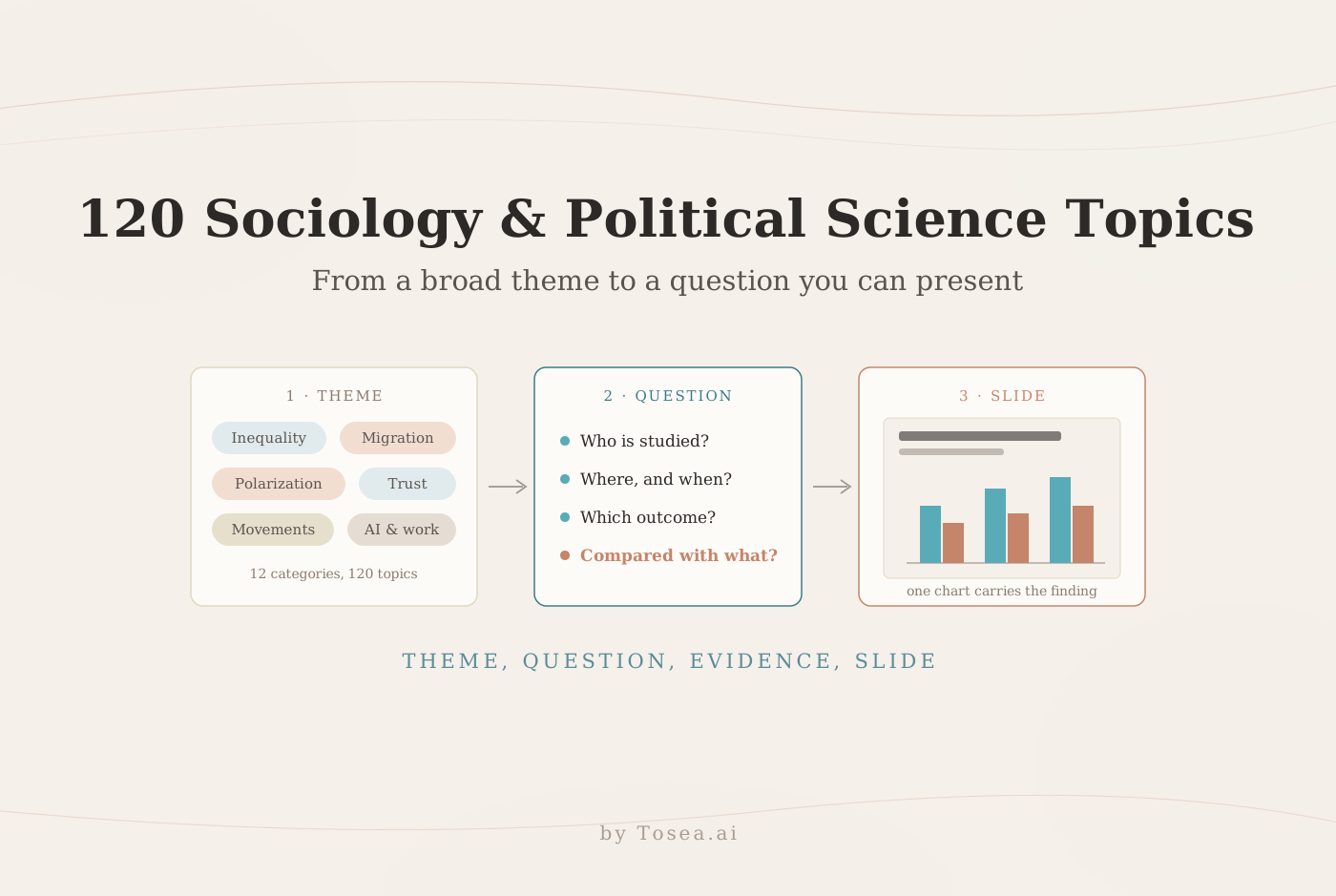
A strong research paper presentation begins with a focused question and obtainable evidence. This guide offers 120 sociology and political science topics for essays, theses, seminars, and classroom presentations, plus a practical method for finding data, defining a research gap, and planning clear slides. Once your paper is ready, you can use Tosea AI to turn it into academic presentation slides, review the proposed outline, and refine the deck before presenting.
The list is organized the way the disciplines organize themselves: inequality, migration, gender and family, education, work and technology, media, democracy, elections, policy, international relations, social movements, and computational methods. If you are looking for neighboring fields, see our lists of economics topics and geography topics.
Quick Answer
The strongest topics connect a visible problem to a testable mechanism. Promising areas include democratic backsliding, polarization, housing inequality, migration, algorithmic bias, family change, social movements, public trust, and AI. Define the population, place, period, outcome, and evidence before committing.
What Makes a Good Sociology or Political Science Topic?
The best topic is one you can convert into a clear, answerable question.
Use this five-part test:
- Specificity: Can you name the population, institution, country, or community being studied?
- Mechanism: Can you explain what may cause the outcome, rather than merely describing a trend?
- Evidence: Is suitable survey, interview, administrative, archival, textual, or digital-trace data available?
- Contribution: Does the project test a claim in a new setting, compare overlooked groups, or improve measurement?
- Presentation value: Can the argument be shown through a chart, timeline, comparison, map, network, or conceptual model?
Journals such as the American Sociological Review and the American Political Science Review regularly publish work on inequality, organizations, migration, activism, democratic accountability, representation, and authoritarianism. Student projects can connect these debates to new populations, institutions, data, or contexts.
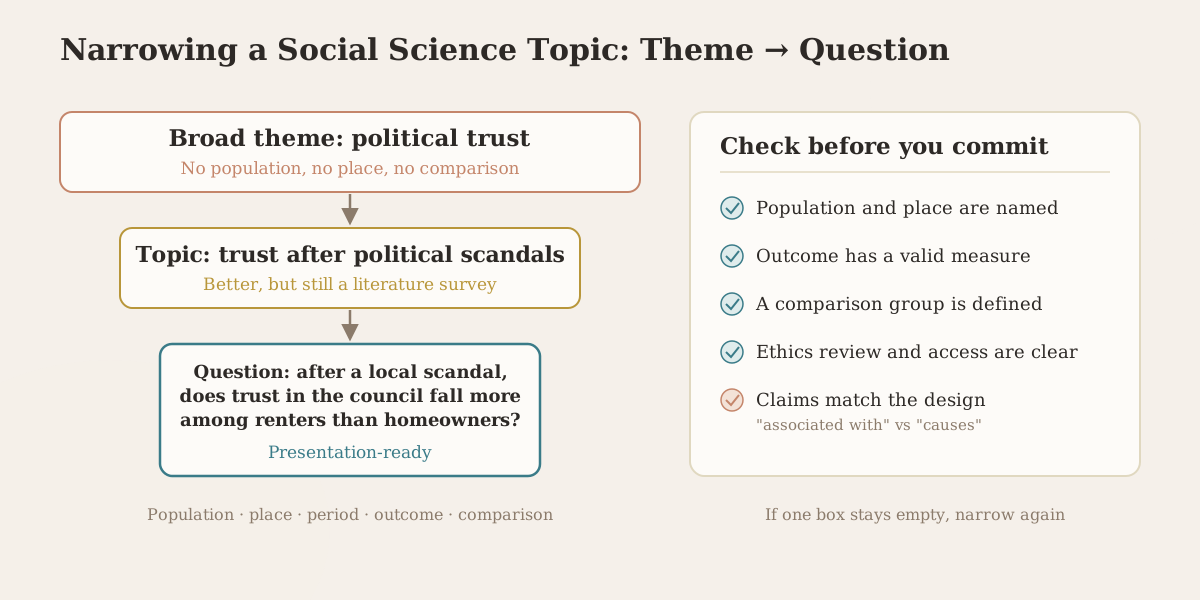
The four constraints that decide feasibility
Most abandoned social science projects fail for reasons that are visible before any work starts.
Ethics and access. Interviews, surveys of minors, fieldwork with vulnerable groups, and any project that records identifiable personal data usually need ethics review. Approval takes weeks, and access to organizations or communities can take longer. Build that into the timeline or choose a design that runs on public data.
Measurement. Concepts such as trust, polarization, or social capital do not measure themselves. Decide which survey item, index, or coding scheme stands in for the concept, and say why it is valid for your population.
Comparison. A single case describes; it does not test. Decide early what the comparison is: another group, an earlier period, a similar country without the policy, or a counterfactual from an experiment.
Causal language. Most student projects use observational data. That is fine, but the wording should match the design. "Is associated with" and "causes" are different claims, and examiners notice the difference.
How to Find an Original Research Gap
Start with a recent article and ask:
- Does the finding hold in another country, institution, age group, or time period?
- Is the proposed mechanism measured directly or only assumed?
- Which group is missing from the sample or hidden by averages?
- Would interviews, experiments, network analysis, or text analysis produce a different conclusion?
- Has a recent policy, platform change, election, or crisis altered the relationship?
Computational social science creates new opportunities and risks. Machine-learning projects should explain labeling, validation, bias, privacy, and generalizability. Useful methodological starting points include a review of large language models in computational social science and a framework for trustworthy supervised machine-learning measures for text.
Best Sociology Topics on Social Inequality and Stratification
- How parental wealth shapes access to unpaid internships
- Whether remote work reduces or reproduces class inequality
- Hidden barriers to upward mobility among first-generation graduates
- How neighborhood stigma affects employment opportunities
- Wealth inequality within racial and ethnic groups
- The relationship between housing tenure and political participation
- How cultural capital influences university admissions outcomes
- Class differences in access to mental-health services
- Social mobility narratives among platform and gig workers
- Whether inflation changes perceptions of economic fairness
Best Topics on Race, Ethnicity, and Migration
- How second-generation immigrants construct national identity
- The effect of ethnic discrimination on trust in institutions
- Refugee integration beyond employment and language proficiency
- How immigration enforcement changes community participation
- Racial differences in experiences with public services
- Media framing of migrants during economic downturns
- Diaspora networks and political engagement in home countries
- How citizenship rules affect young migrants' aspirations
- Interethnic friendship and prejudice reduction on university campuses
- Climate migration and changing local identities
Best Topics on Gender, Family, and Care
- The career effects of unequal caregiving responsibilities
- How hybrid work changes household labor divisions
- Gender differences in experiences of academic precarity
- The social consequences of delayed marriage and parenthood
- How childcare costs shape labor-force participation
- Masculinity norms and willingness to seek mental-health support
- Online communities and changing understandings of gender identity
- The role of grandparents in contemporary care systems
- Single-person households and urban social isolation
- How family policy affects fertility intentions
Best Topics on Education and Youth
- How AI tools affect inequality in student learning
- The hidden curriculum experienced by first-generation students
- School discipline and long-term civic participation
- Social class differences in university major selection
- Student debt and delayed transitions into adulthood
- How teacher expectations influence educational trajectories
- Political socialization through short-form video platforms
- Campus belonging among international students
- The effects of competitive schooling on student well-being
- Whether civic education increases political tolerance
Best Topics on Work, Organizations, and Technology
- Algorithmic management and worker autonomy
- How generative AI changes professional status hierarchies
- Employee surveillance and workplace trust
- Occupational identity after automation-related job redesign
- Informal networks and promotion decisions inside organizations
- Burnout among workers in mission-driven organizations
- The social meaning of productivity in remote teams
- Platform ratings and discrimination in gig work
- How organizations respond to public pressure for diversity
- Worker resistance to data-driven performance management
Best Topics on Media, Culture, and Digital Society
- How recommendation algorithms shape political identity
- Influencer culture and changing definitions of expertise
- The social life of misinformation correction
- Online anonymity and participation in controversial discussions
- Memes as tools of political persuasion
- Digital mourning and public expressions of grief
- How streaming platforms reshape cultural taste
- Generative AI and trust in visual evidence
- Social-media moderation and perceptions of fairness
- Digital exclusion among older adults
Best Political Science Topics on Democracy and Institutions
- Why citizens tolerate democratic norm violations
- How institutional trust changes after political scandals
- The effects of electoral-system design on representation
- Whether citizen assemblies improve policy legitimacy
- Judicial independence during democratic backsliding
- How local government performance shapes national trust
- The political consequences of constitutional reform
- Emergency powers and democratic accountability
- Why anti-corruption agencies succeed in some countries
- The role of legislatures under competitive authoritarianism
Best Topics on Elections, Parties, and Political Behavior
- Affective polarization and willingness to compromise
- How candidate age influences voter evaluations
- The effect of negative campaigning on turnout
- Political participation among first-time voters
- How economic insecurity changes party identification
- Strategic voting in multiparty electoral systems
- The political effects of compulsory voting
- Social networks and the diffusion of campaign information
- Whether political endorsements persuade undecided voters
- How election misinformation affects confidence in results
Best Topics on Public Policy and Governance
- Public support for universal basic income after automation
- Why evidence-based policies fail during implementation
- Administrative burden and unequal access to welfare
- Public attitudes toward congestion pricing
- How policy feedback changes later political participation
- Citizen responses to government use of facial recognition
- Participatory budgeting and neighborhood inequality
- Trust in public-health communication after a crisis
- The politics of affordable housing reform
- How frontline bureaucrats interpret ambiguous policy rules
Best Topics on International Relations and Global Politics
- Economic sanctions and authoritarian consolidation
- Public opinion toward military alliances
- Climate diplomacy between developed and developing states
- How middle powers navigate strategic competition
- The domestic political effects of foreign aid
- Digital sovereignty and cross-border data regulation
- International organizations and public trust
- Refugee responsibility-sharing between states
- Supply-chain security and industrial policy
- How war exposure shapes later political participation
Best Topics on Protest, Social Movements, and Collective Action
- How decentralized movements maintain continuity
- The relationship between online mobilization and offline protest
- Why some protests gain broad public sympathy
- State repression and movement strategy
- The role of art and music in collective identity
- Youth climate activism and political efficacy
- Mutual-aid networks after disasters
- How countermovements influence policy agendas
- Leadership and accountability in leaderless movements
- Movement coalitions across class and racial divisions
Best Computational Sociology and Political Science Topics
- Detecting ideological change with longitudinal text analysis
- Measuring political incivility across social platforms
- Bias in large language models used as survey respondents
- Network analysis of misinformation diffusion
- Machine-learning measures of legislative attention
- Comparing human and AI coding of interview transcripts
- Privacy risks in digital-trace research
- Predicting protest events without reinforcing geographic bias
- Multimodal analysis of political images and captions
- Reproducibility standards for computational social science
From Broad Topic to Researchable Question: Five Worked Examples
A topic from the list is a starting point, not a question. The table shows how five of them narrow into projects a student could finish in one term.
| Topic from the list | Researchable question | Possible evidence | Slide that carries the argument |
|---|---|---|---|
| #6 Housing tenure and political participation | Are renters less likely than owners to vote in local elections, controlling for age and income? | National election study or social survey with tenure items | Grouped bar chart of turnout by tenure and age band |
| #22 Hybrid work and household labor | Did hybrid work change who does weekday childcare in dual-earner couples? | 20 semi-structured interviews | Before-and-after comparison built from coded themes |
| #61 Tolerance of norm violations | Does partisan identity predict acceptance of a rule-breaking incumbent? | Survey experiment with randomized vignettes | Treatment-versus-control dot plot with confidence intervals |
| #83 Administrative burden | Do longer application forms reduce benefit take-up among older applicants? | Administrative data before and after a form change | Line chart of take-up with the reform date marked |
| #113 LLMs as survey respondents | Do LLM-simulated answers match real respondents on trust items? | Published survey marginals compared with model outputs | Side-by-side distribution chart with the largest gaps labeled |
Notice that each question names a population, an outcome, and a comparison, and each suggests the one chart that would carry the finding. That chart is usually the slide your audience remembers.
Reliable Data Sources for Student Research
Students can use established datasets for replication and comparison:
- General Social Survey for US attitudes and behavior
- World Values Survey for cross-national values and trust
- European Social Survey for attitudes, trust, and social conditions across Europe
- V-Dem for democracy and autocratization indicators
- Afrobarometer for African public opinion and governance
- Comparative Study of Electoral Systems for cross-national election surveys
- IPUMS for harmonized census and survey microdata
- Pew Research Center for recent public-opinion reports and released datasets
Check the codebook, sampling design, missing-data rules, weights, and licensing conditions before analysis. A large dataset does not automatically make a question valid. Record the wave, the exact item wording, and the weight you used, because those details become your data slide later.
AI-Ready Research Question Prompt
Use this prompt to turn any topic above into a workable project:
Develop this topic into three feasible social science research questions.

Topic: [insert topic]
Discipline: [sociology or political science]
Level and scope: [insert]
Available evidence: [insert]

For each question, provide:
1. Key variables or concepts
2. Mechanism or interpretive argument
3. Method and data source
4. Ethical or validity risk
5. Likely contribution
6. Seven-slide outline

Do not invent findings, citations, or available datasets.
For field-specific prompt patterns beyond this one, see our collection of prompts for academic presentation slides.
Simple Structure for a Sociology or Political Science Presentation
- Research question and scope
- Why the issue matters
- Existing explanation or theoretical framework
- Research gap and proposed argument
- Data, cases, and method
- Main evidence or expected analysis
- Alternative explanations and limitations
- Implications for theory, policy, or future research
- References and discussion
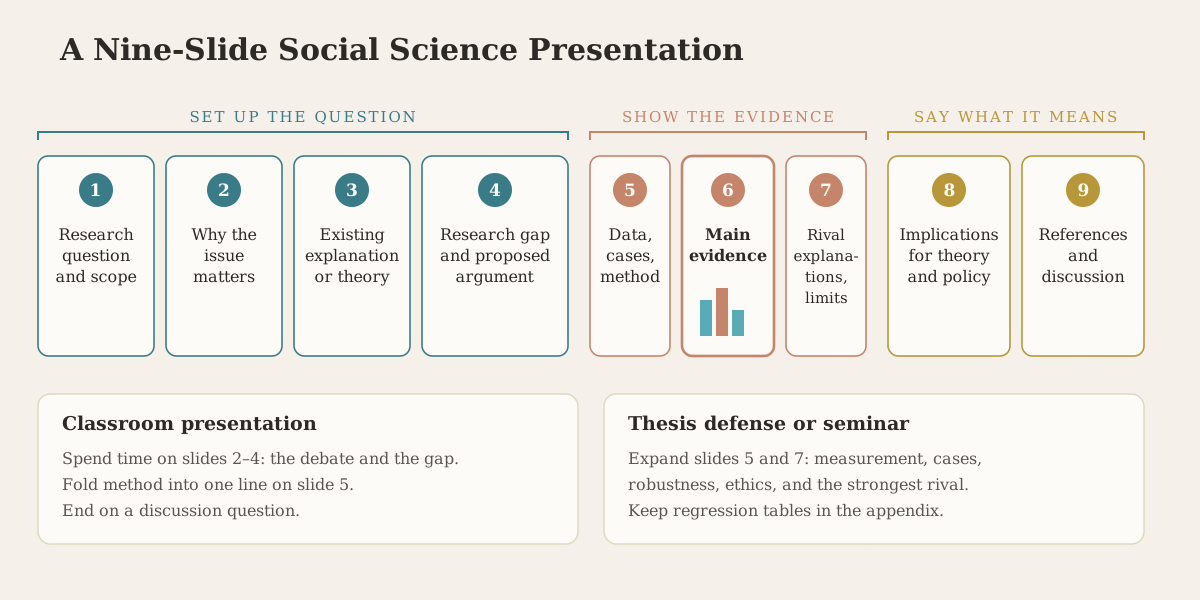
For a classroom presentation, emphasize the central debate and use fewer methodological details. For a thesis defense, explain measurement choices, case selection, robustness, ethics, and limitations in greater depth; our thesis defense presentation guide covers that format slide by slide. For a short conference slot, the 15-minute academic talk guide shows how to cut the same structure down.
What separates a strong social science presentation
One chart does the arguing. Choose the single figure your conclusion depends on and give it the largest slide. Regression tables belong in the appendix unless the audience needs a specific coefficient.
Concepts are defined before they are measured. Say what you mean by "trust" or "polarization" on the framework slide, then show the item or index on the data slide. Audiences in these disciplines often question the measure before they question the result.
Alternative explanations get their own slide. Name the strongest rival explanation and say what your evidence does to it. This is the slide examiners and discussants look for first.
Quotations are sourced like numbers. Interview excerpts need participant codes and context, and they should be checked against the transcript, not paraphrased from memory.
Frequently Asked Questions
What is the easiest sociology topic for a student presentation?
Choose an accessible dataset or a bounded local case. Student debt, campus belonging, remote work, institutional trust, and attitudes toward AI become manageable when the population and outcome are narrowly defined.
What is a good political science topic with public data?
Political trust, participation, representation, corruption perceptions, and policy preferences work well. V-Dem, the World Values Survey, the General Social Survey, the European Social Survey, and Afrobarometer provide relevant data.
How can I make a common topic more original?
Change the population, place, period, mechanism, method, or outcome. A careful replication in a neglected context can be stronger than an ambitious but untestable idea.
Do I need ethics approval for a student sociology project?
Usually, if you collect new data from people through interviews, surveys, or observation, and especially if participants are minors or vulnerable groups. Projects that only analyze anonymized public datasets often need less review, but rules vary by institution, so check with your supervisor early.
How do I turn a completed research paper into presentation slides?
Extract the question, argument, method, strongest evidence, limitations, and implications. Preserve exact labels, figures, tables, and citations, then verify every AI-generated summary against the paper. Our research paper to slides workflow walks through this step by step.
Turn Your Research Into an Editable Presentation with Tosea AI
Once the topic, evidence, and argument are ready, Tosea AI can turn research papers, policy reports, interview summaries, and notes into an editable presentation. Review the outline before rendering, choose layouts or diagrams, and continue changing the layout after generation. This helps preserve tables, figures, citations, case details, and limitations.
Tosea AI should support academic judgment rather than replace it. Students and researchers should still verify claims, quotations, numbers, labels, and references against the original material before presenting. If you are comparing AI presentation tools for coursework, test source fidelity first: upload a paper you know well and check whether the figures, citations, and limitations survive. For a closer look at that workflow, read how to turn a research paper into a presentation.
Editorial Note
These topics summarize active directions in sociology, political science, and computational social science. They are research prompts, not claims that a listed result already exists. Journal pages and methodological reviews informed the categories, while every final question, dataset, method, ethical requirement, and citation should be checked against your course, institution, and supervisor's expectations.
Sources
- American Sociological Review — American Sociological Association / SAGE
- American Political Science Review — American Political Science Association / Cambridge University Press
- Large language models (LLM) in computational social science: prospects, current state, and challenges — Social Network Analysis and Mining, Springer, 2025
- Toward a framework for creating trustworthy measures with supervised machine learning for text — Ju Yeon Park and Jacob M. Montgomery, Political Science Research and Methods
- General Social Survey — NORC at the University of Chicago
- World Values Survey — World Values Survey Association
- V-Dem data — Varieties of Democracy Institute
- Afrobarometer data — Afrobarometer